

Melee Weapons: Field Recognition
Internal Personnel Reference — Department 6 Distribution
A Project member can meet more varieties of hand weapon in 2190 than a twentieth-century soldier normally encountered in an entire career. Local armies manufacture weapons that fit available iron, timber, armor, horses, workshop skill, and inherited fighting traditions. Travelers carry working blades that also serve in fights. Town guards may depend on polearms because a long haft allows a small body of disciplined people to control a gate, street, stair, or crowd. Wealthy households preserve swords as marks of office, while frontier communities often favor weapons that can be repaired by a competent smith with familiar materials. Correct identification gives Department 6 useful information about reach, likely movement, formation practice, local manufacturing capacity, and the social position of the person carrying the weapon.
Field identification begins with construction. Blade length and profile indicate the path the weapon follows through a target. A long haft converts hand movement into reach and leverage. Hooks and lateral projections can catch shields, reins, limbs, shafts, and equipment. A long two-handed grip permits rapid changes of leverage and allows the rear hand to accelerate or arrest the weapon. A rigid weighted head produces a predictable arc, while a hinged head continues moving after the handle changes direction. Armor also affects weapon design: narrow points concentrate force, broad blades cut exposed tissue, and hammer or beak faces apply force through small contact areas. The historical names in this article provide a common vocabulary, while the physical description remains the most durable part of any intelligence report.
Golok
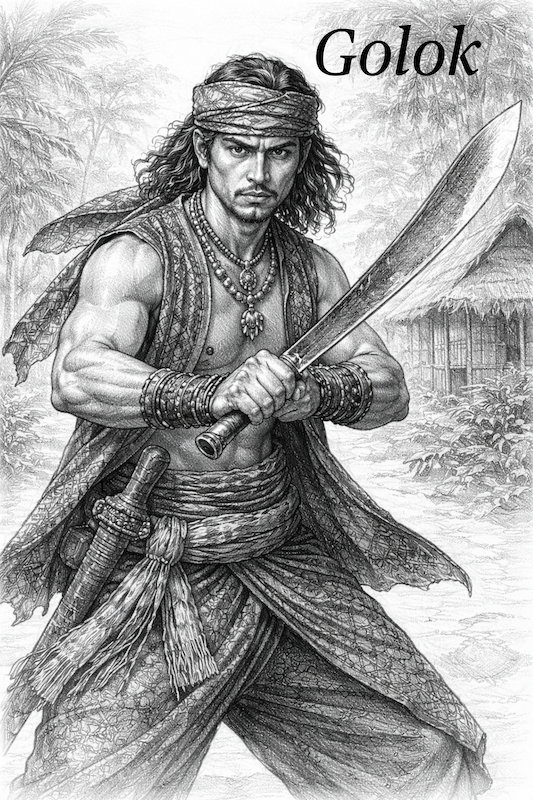
The golok is a heavy single-edged knife or short sword associated with Indonesia and the Malay world. Its broad blade places useful mass forward of the hand and gives the weapon a strong chopping action. Many goloks live comfortably in two roles: the same blade clears vegetation, cuts poles, opens carcasses, prepares materials, and serves as a close-combat weapon. Simple examples carry little or no guard because the hand works behind a relatively broad blade and the tool tradition emphasizes cutting power and utility. Local makers vary the point, curvature, thickness, hilt, and scabbard according to regional practice and intended work.
For Project personnel, a golok often reveals more about daily life than a purpose-built military sword. Edge wear, stains, repairs, grip polish, and a working scabbard indicate routine labor. A thicker spine and forward balance support forceful chopping at short range, while the modest overall length makes the weapon practical in brush, houses, boats, markets, and crowded roads. A report gains value from the local name, blade length, degree of curvature, spine thickness, grip construction, and the way the owner carries it. These details can separate a household or agricultural blade from a weapon made primarily for fighting.
Yataghan
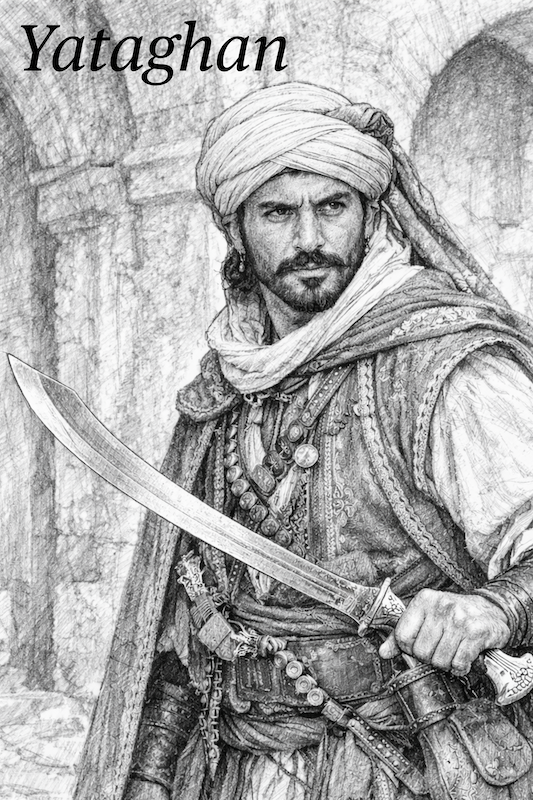
The yataghan is a short single-edged sword associated with the Ottoman world, Anatolia, and the Balkans. Its blade commonly curves inward toward the cutting edge before sweeping toward the point, producing the distinctive forward-curving profile found on many surviving examples. The hilt usually lacks a conventional guard and often ends in two flared ears that lock the grip against the heel of the hand. The combination produces a compact sidearm with a powerful draw cut and enough point control for thrusting at close distance.
The yataghan rewards careful recognition because its form reflects both function and culture. The guardless hilt makes the flared pommel especially important to retention, and decorated grips, inscriptions, metal fittings, and scabbards may identify workshop tradition, owner, or region. The forward-curving blade keeps useful mass near the outer portion of the weapon while preserving a compact overall length. In a field report, Project members can record the inward curve, the two-eared pommel, blade length, decoration, and scabbard style. Those features usually provide a stronger identification than a general description such as curved sword.
Bastard Sword
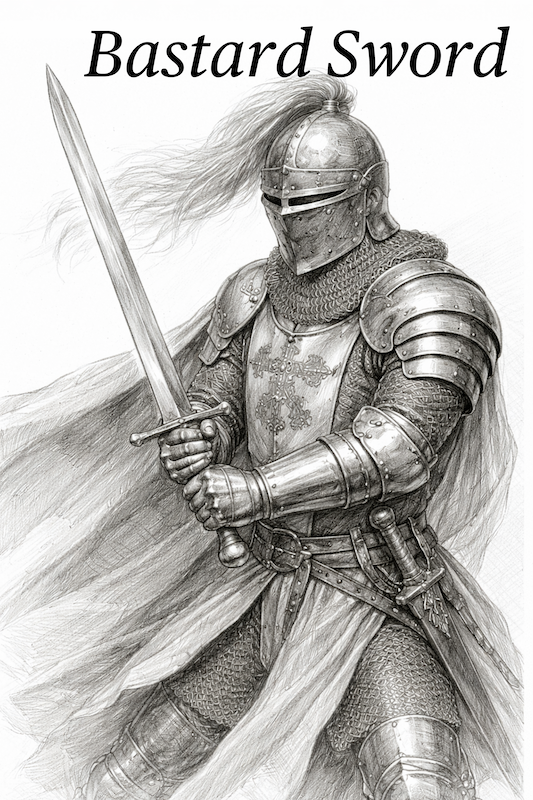
Bastard sword is a historical and modern collecting term applied to European swords whose grips permit both one-handed and two-handed use. The same family is often described as hand-and-a-half swords. The blade is usually straight and double-edged, with enough length for broad cuts and a point capable of committed thrusts. The extended grip gives the wielder additional leverage when both hands are used, while the weight and proportions remain manageable enough for one-handed actions when the other hand carries a shield, controls a horse, grapples, or performs another task.
In Project intelligence work, the distinction rests in proportion. A sword with a grip clearly longer than an ordinary arming-sword hilt and shorter than the spacious two-handed grip of many longswords fits comfortably within the bastard-sword category. Historical naming overlaps heavily, so the label works best as a description of handling characteristics. Overall length, blade length, grip length, guard shape, pommel, and mass provide the useful facts. A weapon of this kind also tells a field observer something about training: effective use takes advantage of transitions between one hand and two, close thrusting, leverage at the bind, and rapid changes of measure.
Kama
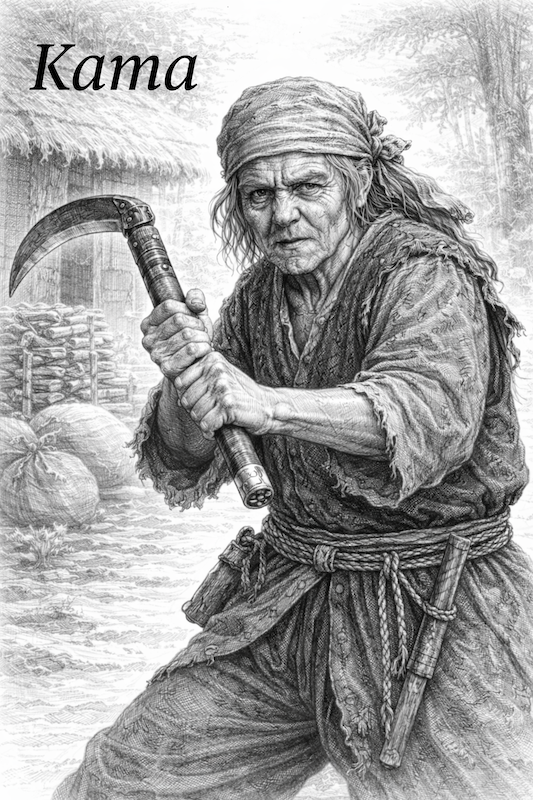
The kama is a short-handled sickle associated especially with Okinawan and Japanese agricultural practice and martial traditions. A typical kama has a compact wooden handle with a short blade projecting at roughly a right angle from the upper end. The inner curve forms the principal cutting edge. As a tool, the form cuts grasses, grain, and light vegetation through a drawing motion. As a weapon, the same hooked blade supports short cuts, catches, traps, and close-range thrusting actions with the point or heel of the blade.
Project members encountering a kama can learn much from context. Farm wear and a plain handle indicate a working implement, while paired carry, reinforced hafts, purpose-made sheaths, or martial fittings can indicate training use. The short reach places the wielder close to an opponent, and the hook creates opportunities to seize clothing, limbs, weapons, and straps. A report benefits from the handle length, blade length, curvature, edge placement, method of fastening the blade to the haft, and whether the owner carries one or a pair. These details also help distinguish the kama from larger field sickles and improvised hooked tools.
Jian
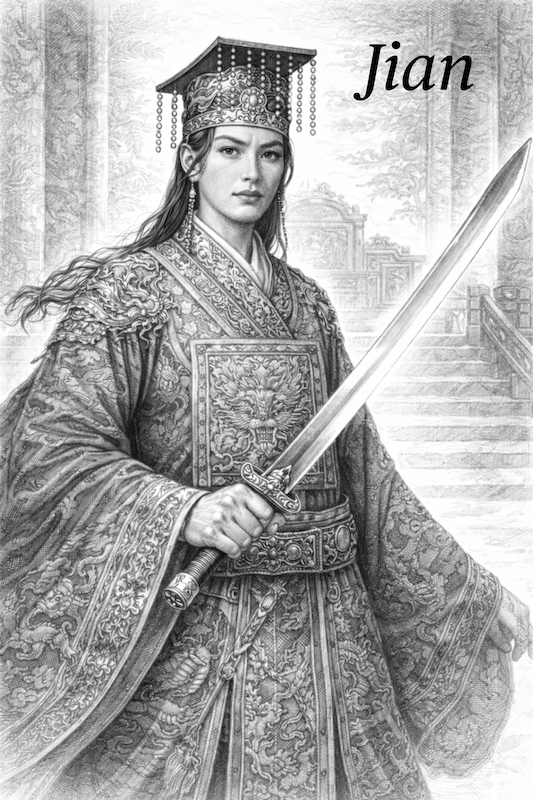
The jian is the traditional Chinese straight double-edged sword. Its blade carries two working edges that converge into a central point, and the hilt commonly includes a compact guard, one-handed grip, and pommel. Jian vary widely across Chinese history in length, blade section, stiffness, balance, and decoration. The basic form supports direct thrusts, cuts from either edge, changes of line with minimal wrist rotation, and controlled point work. Well-made examples combine enough stiffness for accurate thrusting with enough blade presence for effective cuts.
For Department 6, the paired edges and straight blade provide the first recognition features. The weapon may also carry inscriptions, tassels, decorated fittings, or a formal scabbard that indicate rank, school, family possession, or ceremonial importance. A trained owner may use relatively economical motions because the point remains available through many changes of guard. Field reports gain precision from blade length, blade width, guard form, grip, pommel, scabbard, inscriptions, and the local term used by the owner. These details can connect an individual weapon to a broader Chinese martial or social tradition.
Kiếm
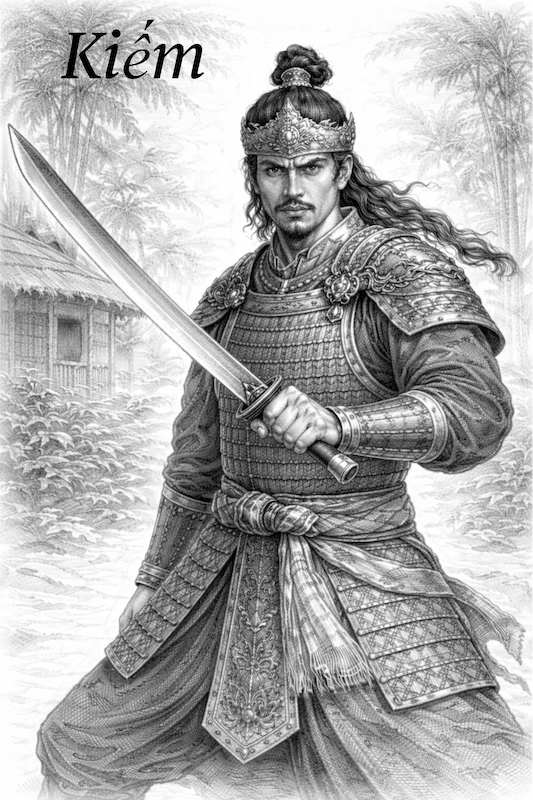
Kiếm is the Vietnamese term commonly used for a straight double-edged sword related in broad construction to the Chinese jian. Vietnamese examples developed their own proportions, guards, grips, decoration, scabbards, and regional styles. The straight double-edged blade allows thrusts along the centerline and cuts from either side, while the relatively compact hilt supports quick changes of direction. In surviving and reconstructed forms, the weapon can appear as a military arm, a prestige object, a family possession, or part of a formal martial tradition.
A Project member gains useful intelligence by preserving the Vietnamese identification when local speakers use it. The word connects the object to language, history, and community in a way that the generic phrase straight sword cannot. Physical description still carries the evidence: blade length, edge geometry, point, guard, grip, pommel, fittings, decoration, and scabbard construction. When a weapon appears in ceremony or as an emblem of office, the owner’s manner of carrying it may matter as much as the blade. A functional field weapon often shows sharpening, grip wear, replacement fittings, and repairs that reveal continued practical use.
Ranseur
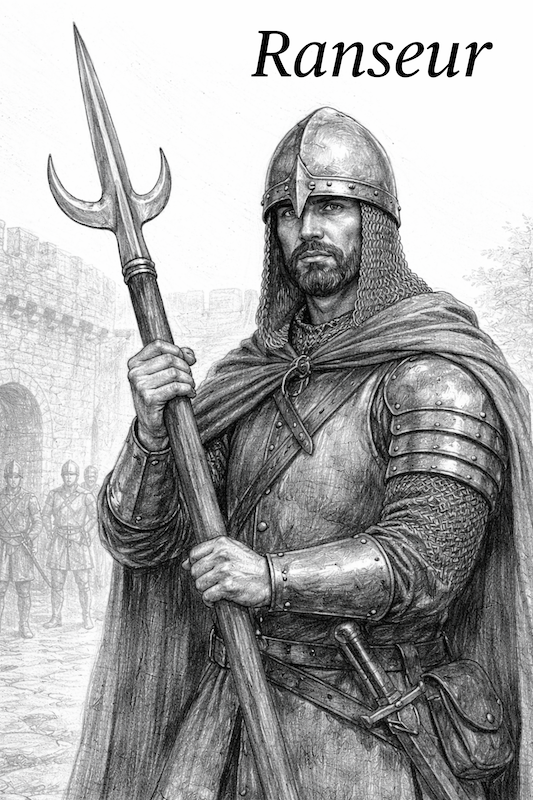
The ranseur is a European polearm built around a long central thrusting blade with two smaller lateral projections near its base. The central point dominates the weapon and gives it the direct reach of a spear. The side elements widen the working head and can deflect, bind, catch, or control another shaft or weapon during close contact. The exact shape varies: some lateral lugs angle outward, some curve slightly backward, and some appear almost blade-like. These differences place individual ranseurs close to related forms such as the spetum and partisan.
In the field, the ranseur usually indicates organized infantry use because its length and specialized head reward spacing, formation discipline, and familiarity with polearm leverage. Project personnel can record total length, central blade length, the direction of the lateral projections, socket construction, shaft material, and any reinforcement below the head. The head geometry matters tactically. A long central point threatens at distance, while the side lugs become important once weapons meet and slide together. A group carrying similar ranseurs may therefore present a more disciplined obstacle than the weapons’ simple spear-like appearance first suggests.
Corseca
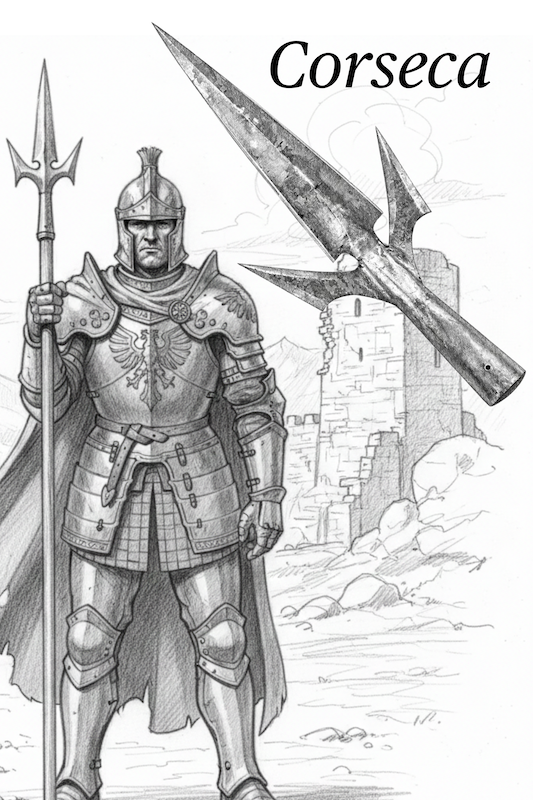
The corsesca, often rendered in English as corseque or corsèque, is a European polearm with a long central spear point and two prominent side blades or wings. The three points create a broad head capable of thrusting while also giving the wielder surfaces for catching, deflecting, and controlling another weapon. Many examples developed in Italy and neighboring regions during the late medieval and Renaissance periods. The side blades may curve outward or forward and can produce a trident-like silhouette while remaining part of a spear-centered weapon.
Department 6 personnel can identify the corsesca by the dominance of the central point combined with substantial lateral blades. The overall effect is broader and more blade-like than many ranseurs. A long haft places the weapon firmly in the polearm class and gives strong leverage during binds. In reports, the most useful details are the shape and orientation of the two side blades, the length of the central point, the socket, shaft reinforcement, and total weapon length. Local names deserve preservation because corsesca, ranseur, spetum, and related terms often overlap in later collections and post-Fall reproduction.
Bec de Corbin
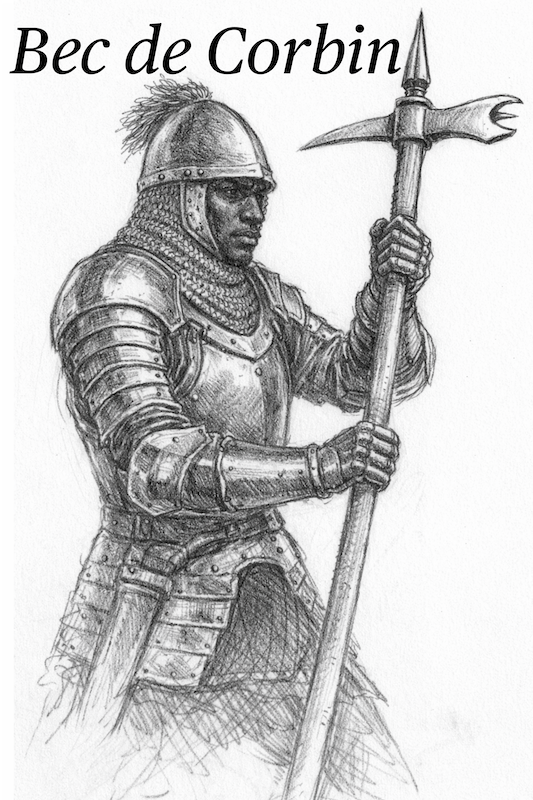
The bec de corbin is a European pole weapon whose name means raven’s beak. Its characteristic working face is a narrow, curved or angular beak designed to concentrate force onto a small area. Many examples pair the beak with a hammer face and a thrusting spike at the top of the head. Mounted on a sturdy haft, the weapon gives a trained fighter several tools in one compact head: the spike supports thrusting, the hammer applies blunt force, and the beak delivers concentrated impact against hard targets and can also catch edges or equipment.
The weapon’s construction reflects combat against armor and other resistant surfaces. A broad cutting edge spreads impact, while the beak focuses it. Project personnel can recognize a bec de corbin by the prominent rear beak and the hammer-like opposing face. The exact historical boundary between bec de corbin, polehammer, and related poleaxes varies, so a report gains more value from the head description than from a single label. Record total length, head arrangement, beak shape, hammer face, top spike, side straps, and shaft construction. Heavy wear on one face can also indicate the owner’s preferred method of use.
Ahlspiess
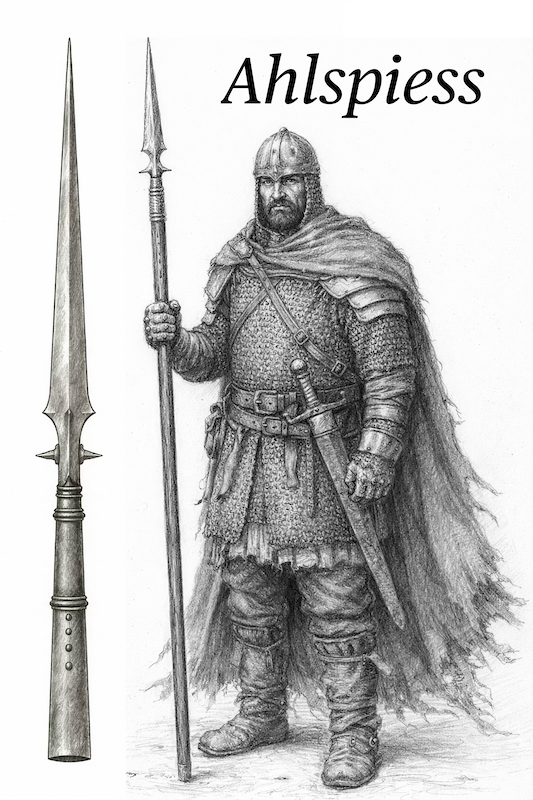
The ahlspiess is a German and Austrian thrusting pole weapon built around an exceptionally long, narrow steel spike. The point often has a square or diamond section that gives stiffness and concentrates force during a thrust. Many examples include a round guard or rondel at the base of the spike, protecting the forward hand and marking the transition between steel head and wooden shaft. The weapon’s form emphasizes penetration and reach with very little cutting surface.
For Project members, the ahlspiess is one of the clearest examples of a weapon whose construction reveals its intended motion. The long spike channels nearly all offensive value into the thrust. The shaft supplies reach and two-handed control, while the rondel provides hand protection during close engagement. A field report can record spike length, cross-section, rondel diameter, total length, shaft thickness, and side straps or reinforcement. In formation, several ahlspiess points can create a dangerous forward barrier, and the narrow heads occupy less space than broad-bladed polearms when ranks work close together.
Boarding Pike
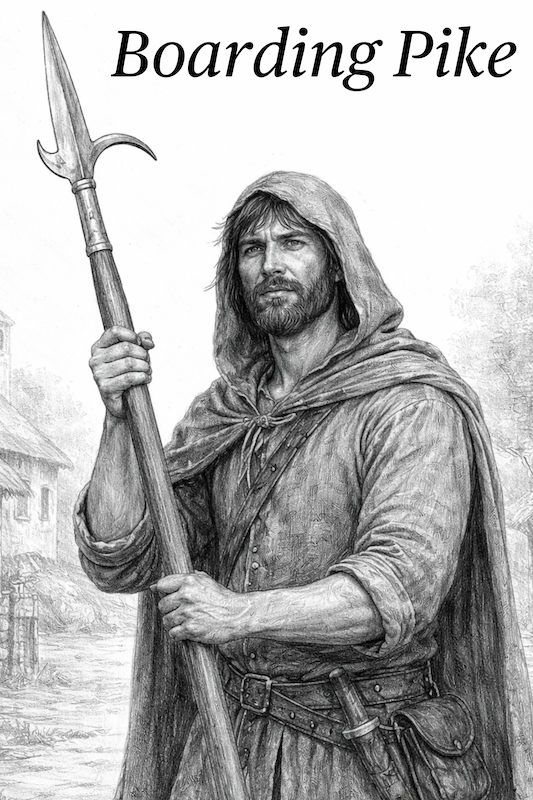
A boarding pike is a naval pole weapon designed for fighting across decks, gangways, rails, hatchways, and the narrow approaches created when vessels come together. It uses a long wooden shaft with a compact thrusting head, giving sailors reach while keeping the working end simple and durable. The weapon can defend a rail against boarders, push an attacker away from a hatch, threaten a narrow passage, or support an assault onto another vessel. Naval examples favor practical construction because salt water, storage, rigging, and confined spaces punish delicate fittings.
Department 6 personnel can recognize a boarding pike by the combination of spear-like head, manageable shipboard length, and fittings suited to maritime storage and handling. The weapon often appears shorter than battlefield pikes because decks impose hard limits on turning and carrying long shafts. The shaft itself can provide leverage for pushing as well as thrusting. A useful report records total length, head shape, butt fitting, shaft diameter, corrosion, storage location, and whether several identical examples are carried aboard the same vessel. A rack of boarding pikes indicates preparation for close naval action even when firearms are also present.
Lochaber Axe
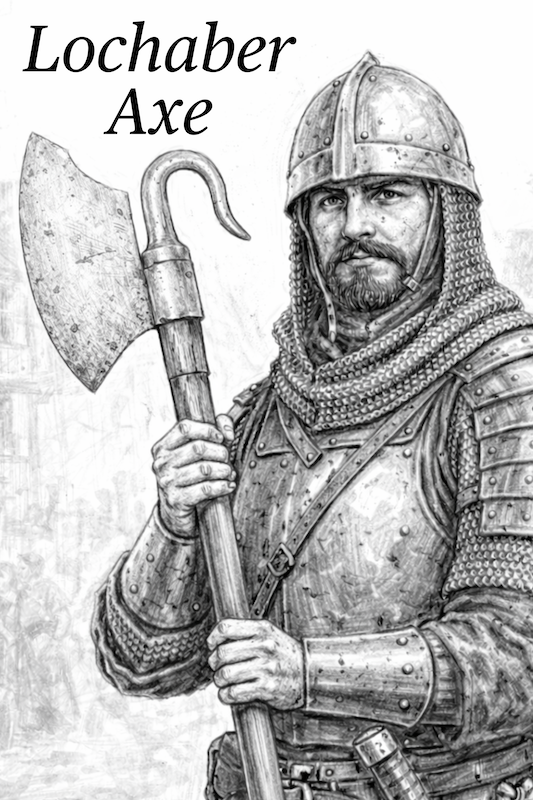
The Lochaber axe is a Scottish polearm built around a large cleaver-like axe blade mounted on a long shaft. Many examples include a rear hook, often called a cleek, near the upper portion of the head. The long cutting edge gives the weapon a powerful chopping surface, while the pole provides reach and leverage. The hook adds a second kind of control by catching equipment, clothing, limbs, or obstacles. Historical forms vary considerably in blade shape, haft length, and the size and placement of the hook.
In Project field work, the Lochaber axe can indicate militia, guard, or ceremonial traditions connected with Scottish or later revival practice. The broad head is visually distinctive and also affects movement: a large blade builds momentum, so recovery after a committed strike requires space and practiced control. The hook can create hazards even when the blade itself misses. A report gains precision from blade length, blade depth, hook position, total haft length, method of attachment, and any metal straps running down the shaft. These features separate specific poleaxe families more reliably than a casual label based only on silhouette.
Scimitar
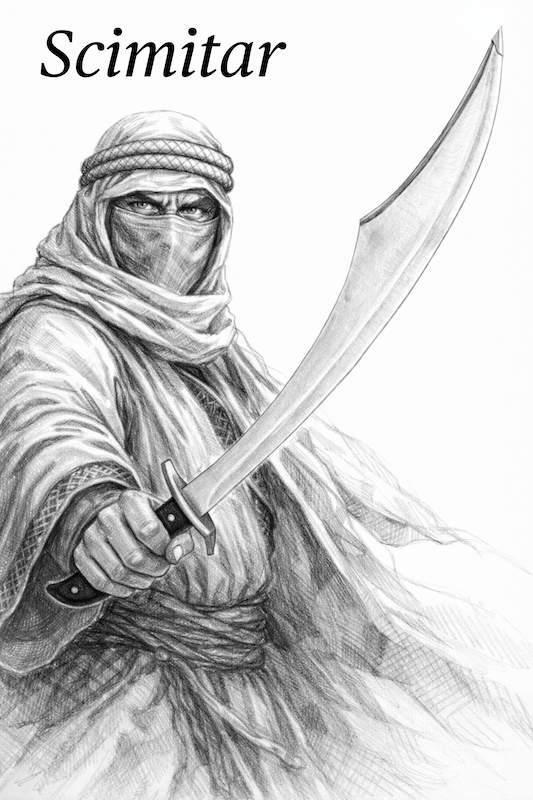
Scimitar is a broad European-language term applied to several families of curved single-edged swords from the Middle East, North Africa, Central Asia, and South Asia. It describes a visual family more readily than a single standardized weapon. Kilij, shamshir, talwar, saif, and other regional swords can all appear under the label in old books, trade descriptions, and modern conversation. Their blades, hilts, curvature, balance, and fighting methods differ enough that the local or historical name carries useful intelligence whenever it can be established.
Project members can treat scimitar as an initial recognition category for an outward-curving single-edged sword whose exact origin remains uncertain. Curvature usually supports a slicing action by keeping the edge moving across the target during the cut, while blade width and point shape determine how well an individual weapon thrusts. A useful report records curvature, blade width, point profile, guard, grip, pommel, scabbard, decoration, and the owner’s terminology. Those observations allow later identification as a more specific sword type and may connect the weapon to a particular culture, trade route, military unit, or workshop.
Bill
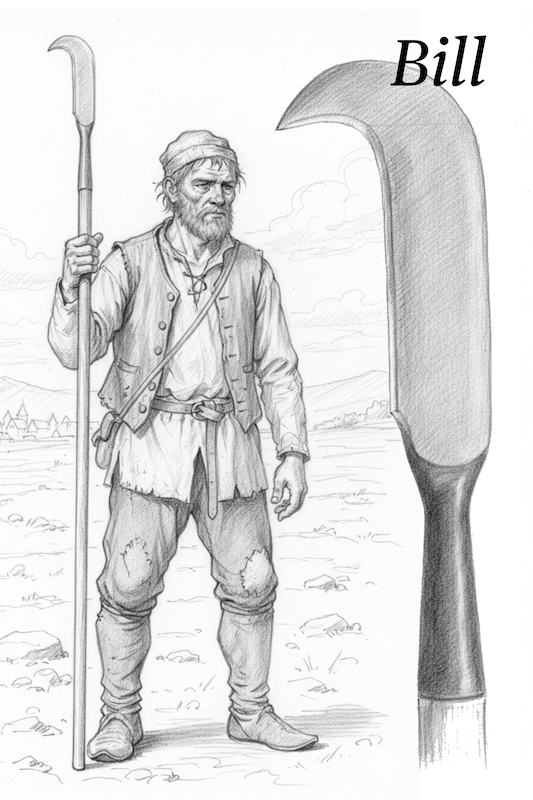
The bill is a European polearm descended from agricultural cutting hooks used for pruning and clearing vegetation. Military bills place a heavy hooked blade on a long shaft and often add a thrusting point, rear spike, or additional projections. The hook gives the weapon a powerful pulling action at the end of a long lever, while the cutting edge can strike exposed targets and the upper point can thrust. English and Italian traditions produced many forms, and the word bill covers a broad family rather than a single exact head shape.
The bill’s field significance comes from control as much as injury. A hook can seize the rim of a shield, a weapon shaft, clothing, tack, or a limb and apply the leverage of the entire pole. In a formation, several bills can disrupt mounted or heavily equipped opponents while neighboring weapons provide thrusts. Project personnel can record the main hook, top point, rear projections, head length, total shaft length, and the way the head is fixed to the wood. A community able to manufacture bills may be drawing directly on agricultural ironworking traditions, making the weapon an important clue to both militia organization and local craft capacity.
Glaive
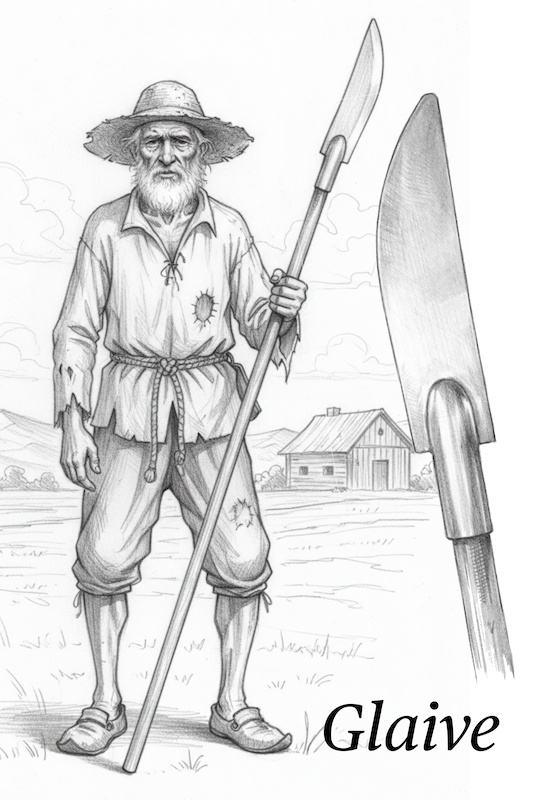
The glaive is a European polearm consisting of a long single-edged blade mounted in line with a wooden shaft. The head resembles an enlarged knife or short sword blade, giving the weapon a clear cutting edge and a point that can support thrusts. The long haft converts relatively compact hand movement into broad cutting arcs and gives the wielder reach beyond an ordinary sword. Some glaives add a small rear projection or hook, while the central form remains blade-dominant.
For Department 6 identification, the glaive is defined by the long edge aligned with the shaft and the relatively clean blade profile. The weapon’s effectiveness depends on space, leverage, and edge control. A skilled wielder can cut with the outer portion of the blade, thrust with the point, and use the shaft to manage distance. In a report, record blade length, curvature, width, point, rear projections, total length, and any reinforcing straps below the head. These details help distinguish a glaive from a fauchard, bill, or guisarme when local names have shifted during generations of reproduction.
Guisarme
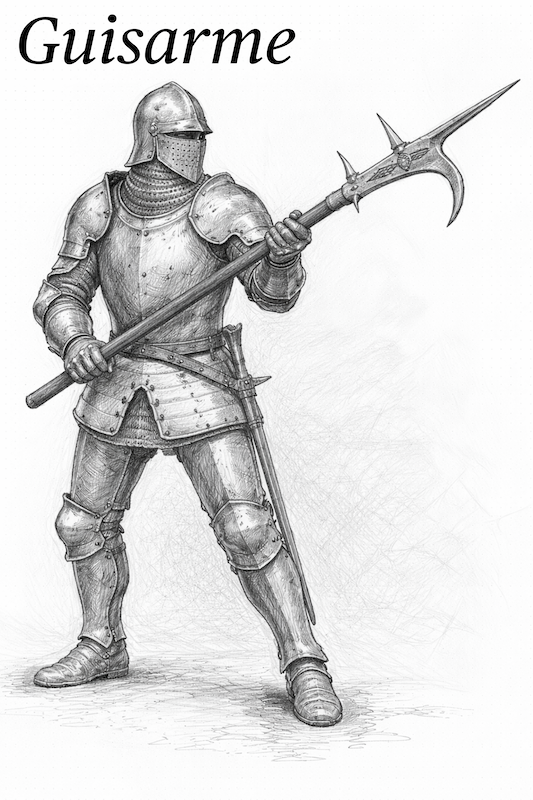
The guisarme is a European hooked polearm descended from pruning tools. Its working head emphasizes a concave hook capable of catching and pulling at the end of a long shaft. Military forms can combine the hook with cutting edges, thrusting points, or additional projections. The hook changes the weapon from a simple long-range cutter into a control tool that can seize shields, reins, weapon shafts, limbs, and equipment. The haft then supplies leverage to pull the captured object off line or toward the wielder.
A Project member observing a guisarme can expect its wielder to exploit distance and entanglement. The head may enter from the side, catch behind an object, and reverse direction through a pull. This creates a different threat from a spear that works mainly along the line of its point. Historical names overlap with bills and related hooked polearms, so the report can preserve the local name and describe the actual head. Hook depth, cutting edges, secondary points, total length, shaft reinforcement, and formation use provide the facts needed for later analysis.
Arming Sword
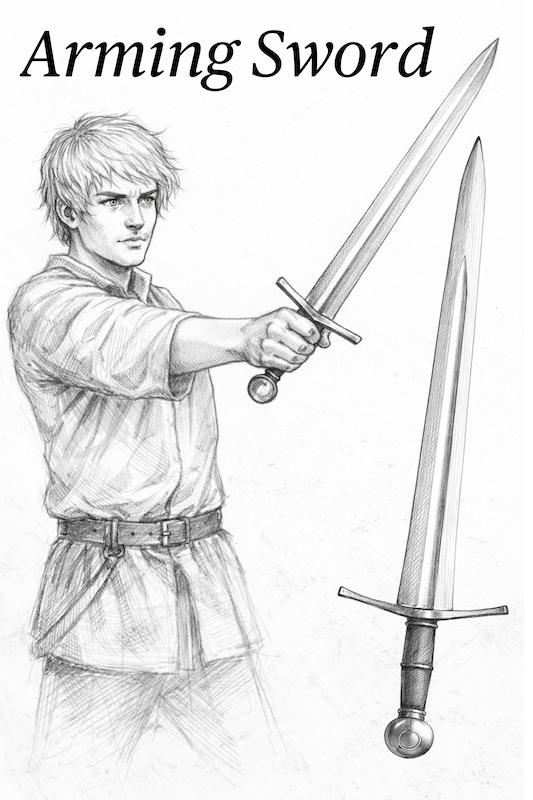
The arming sword is the classic one-handed European cruciform sword of the high and late Middle Ages. It normally has a straight double-edged blade, crossguard, one-handed grip, and pommel. Blade proportions vary from broad cutting forms to narrower profiles with stronger points, yet the weapon remains compact enough for use with a shield, buckler, reins, or another item in the free hand. Its balance supports cuts from either edge and direct thrusts while preserving quick recovery after each action.
For Project personnel, the one-handed grip provides the most useful distinction from longer two-handed sword families. An arming sword also carries social information. Fine fittings can indicate status, while a plain blade with repeated sharpening and repaired leather may belong to a working soldier. Record blade length, fuller or ridge, point shape, guard, grip length, pommel, scabbard, and wear. The weapon often appears in cultures that maintain trained individual swordsmanship alongside shield use, mounted service, or close infantry fighting.
Gladius
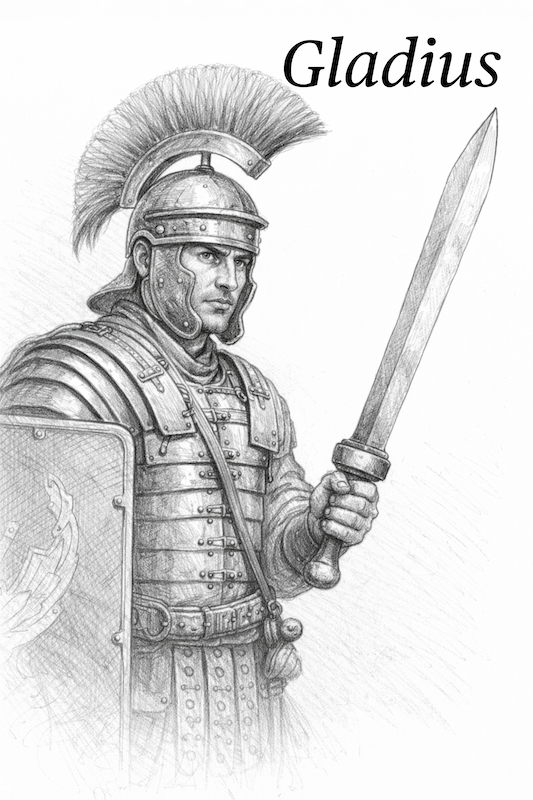
Gladius is the conventional modern term for the short swords carried by Roman legionaries during much of the Republic and early Empire. Several historical patterns existed, including forms with relatively broad blades and strong triangular points. The weapon was compact enough for dense infantry formations and combined effective thrusting with useful cutting edges. Its short length made it easy to draw and manipulate behind a large shield, especially when soldiers fought at close intervals.
Project members can identify a gladius-type weapon by its Roman context, compact straight double-edged blade, and one-handed hilt. Reproductions in 2190 may vary considerably because local smiths often work from surviving books, museum images, inherited copies, or partial descriptions. A field report therefore benefits from blade length, blade profile, point, hilt, scabbard fittings, and the military context in which it appears. A unit equipped with gladius-like swords and large shields may be consciously recreating Roman methods, while an isolated short sword may simply borrow the convenient blade form.
Kilij
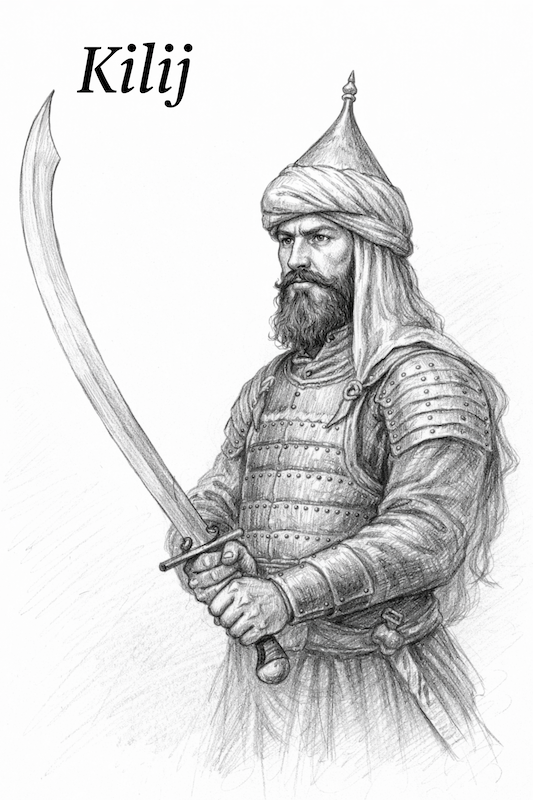
The kilij is a Turkish and Ottoman single-edged saber whose mature forms often show increased curvature and widening near the outer portion of the blade. This widened section, commonly called the yalman or yelman, adds mass near the cutting area and can carry a sharpened back edge. The result is a sword that delivers powerful cuts while retaining a useful point. Hilt forms vary across period and region, yet the blade profile gives many kilij their most recognizable character.
For Project personnel, the outer widening is the most valuable visual clue. The blade usually feels more forward-weighted than a narrow saber, and the curvature encourages a draw through the target during a cut. Mounted users can benefit from that geometry because the horse’s movement adds relative speed while the curved edge continues slicing. A useful report records total blade length, point shape, location of maximum curvature, presence and length of the yalman, guard, grip, scabbard, and local name. These details separate a kilij from the wider collection of swords casually called scimitars.
Poleaxe
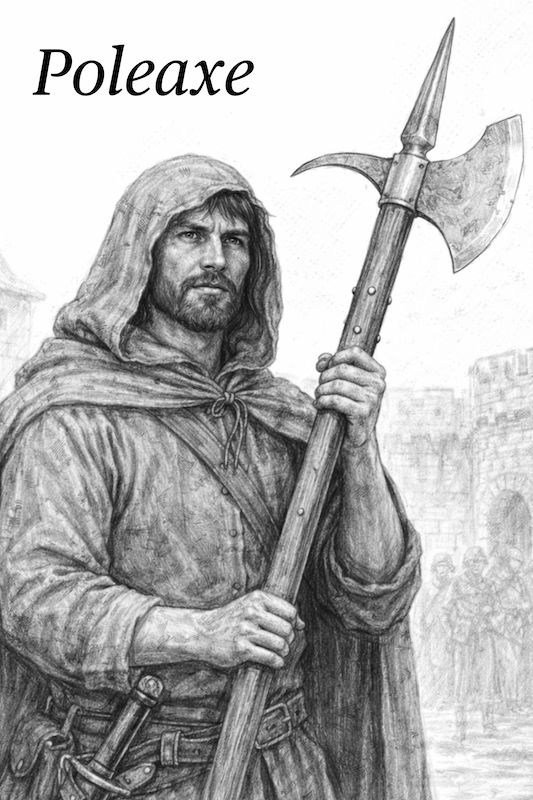
The poleaxe is a compact European two-handed pole weapon associated especially with armored fighting in the late medieval period. A typical head combines several working surfaces around a stout shaft: an axe blade or hammer face, an opposing beak or hammer, and a thrusting spike at the top. Many examples also carry a butt spike. Metal side straps strengthen the haft around the head. The weapon is commonly shorter than battlefield pikes and many infantry polearms, giving it enough reach for leverage while preserving control in close combat.
The poleaxe is a system of attack surfaces built around a strong lever. The upper spike thrusts, the axe or hammer strikes, the rear beak concentrates force, and the shaft can push, bind, or assist grappling. In armored combat, the narrow points and hammer faces become especially important because they focus force and attack gaps. Project personnel can record total length, head arrangement, top and butt spikes, langets, shaft section, and evidence of armor use among the carrier’s opponents. A trained poleaxe wielder is likely to change ends and surfaces rapidly, so identification of the entire head matters more than attention to its largest blade alone.
Spatha
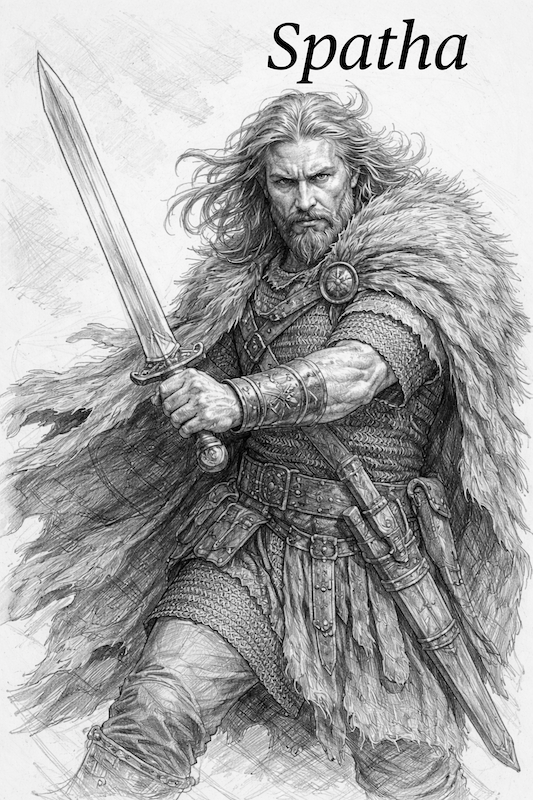
The spatha is a long straight double-edged sword associated with the Roman world and the centuries that followed it. It developed as a longer companion to the shorter Roman infantry swords and became important among cavalry before expanding into wider infantry use. Later European sword traditions inherited much from the spatha family. Typical examples combine a long cutting blade with a serviceable thrusting point and a one-handed hilt.
Shape alone rarely settles a spatha identification because many early medieval swords share the same broad arrangement. Provenance, fittings, blade construction, and cultural context carry substantial weight. Project personnel examining an original, heirloom, reproduction, or locally forged descendant can record blade length, width, fuller, point, guard, grip, pommel, scabbard, and known history. A community using spatha-like swords may be drawing from Roman, Migration-period, or early medieval models, and the surrounding equipment often clarifies which tradition the makers intended to reproduce.
Flyssa
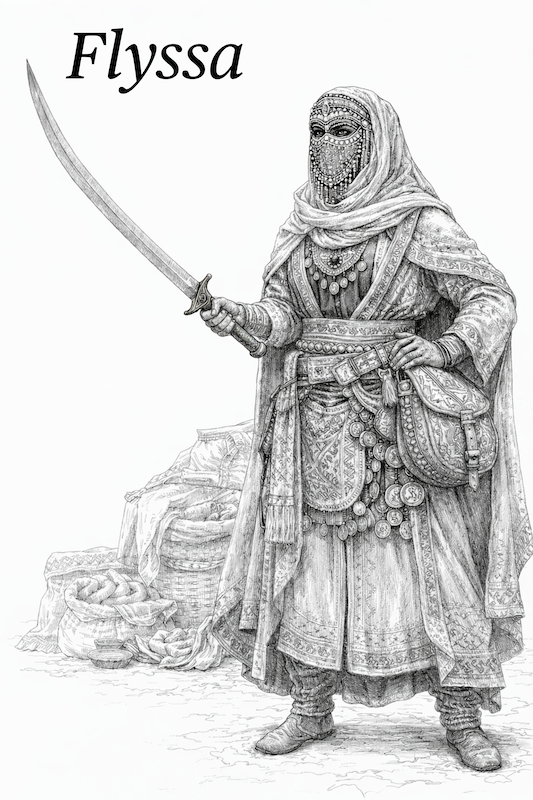
The flyssa is a traditional Algerian weapon associated especially with Kabyle communities. Historical examples range from large knives to long swords. Many have a narrow single-edged blade, a straight or nearly straight spine, an acute point, and decorative engraving running along part of the blade. Longer examples can widen gradually toward the outer working section. The hilt commonly has little or no guard, giving the weapon a clean transition from grip to blade.
Department 6 personnel gain the most useful identification by combining construction with cultural context. A long flyssa may function mechanically as a cutting and thrusting sword, while the local name connects it to North African manufacture, family tradition, or trade. Decoration may also carry information about origin or ownership. Record blade length, width, curvature, point, engraved designs, hilt material, scabbard, and the term used by the carrier. Wear patterns can show whether the object serves as a living weapon, a prestige possession, or an inherited piece kept largely for ceremony.
Pike
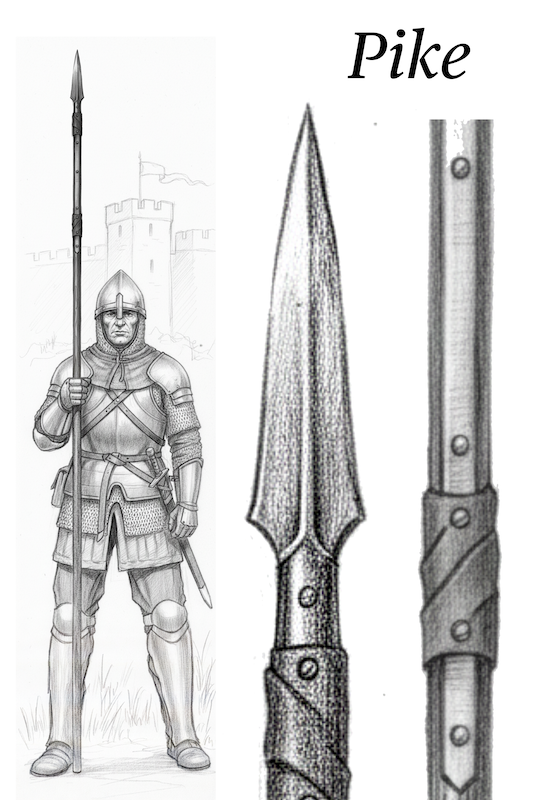
The pike is an exceptionally long infantry thrusting spear. Historical battlefield pikes often reach several meters and depend on formation use for their full effect. The head is usually compact because the shaft provides the defining characteristic: reach. In ordered ranks, multiple pikes project ahead of the front line and create a dense field of points. The same formation can resist mounted attack, contest enemy infantry at distance, and protect more specialized troops positioned within or behind the block.
Project members encountering pikes can infer organization from the weapon itself. Long shafts require drill, spacing, coordinated movement, transport arrangements, and room to deploy. A lone wielder gains reach but also faces difficulty in confined spaces and during attacks from the flank. A report can record shaft length, head shape, butt fitting, shaft wood, unit spacing, method of carrying the pikes on the march, and the presence of sidearms. The condition and uniformity of dozens of shafts also reveal something about local timber supply, workshops, arsenals, and the ability of a government to maintain standardized equipment.
Halberd
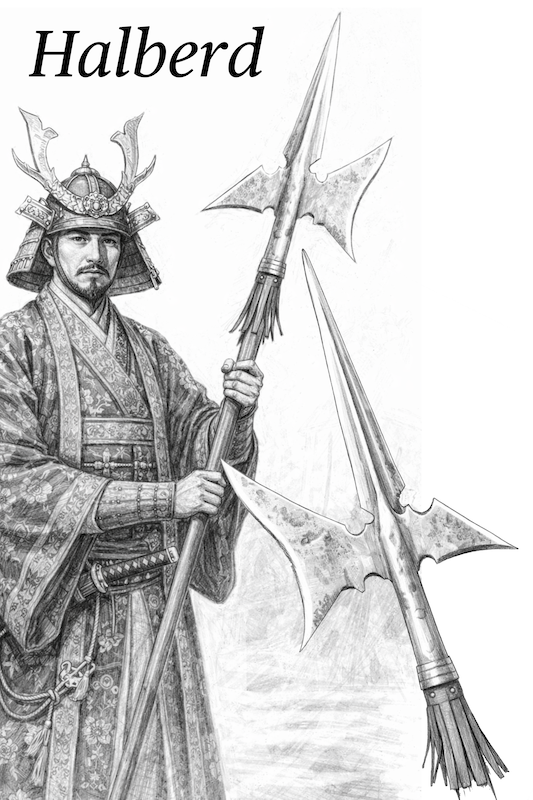
The halberd is a European polearm that combines an axe blade, a thrusting spike, and a rear hook or beak on a long shaft. These elements give the weapon several distinct actions from the same grip. The top spike reaches like a short spear, the axe blade delivers broad cuts, and the rear projection can catch or deliver concentrated strikes. Mature halberds became sophisticated military weapons associated with trained infantry and later with guards and ceremonial troops.
The halberd’s tactical value comes from the ability to change function without changing weapons. A wielder can threaten with the point, strike from the side with the axe, reverse the head to use the hook, and use the long shaft to manage distance. Project personnel can record blade shape, hook shape, spike length, total length, langets, shaft construction, and unit context. An ornate halberd with polished fittings may signal guard or ceremonial service, while a plain, repaired example carried by militia speaks to practical local manufacture. The basic head arrangement remains the strongest recognition feature.
Fauchard
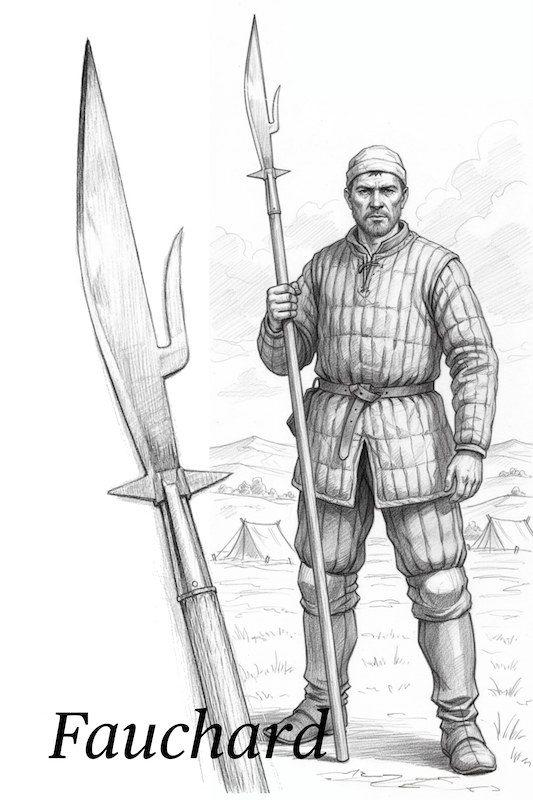
The fauchard is a European pole weapon built around a long curved single-edged blade mounted in line with a wooden shaft. The cutting edge follows the outer, convex side of the curve, creating a sweeping blade that resembles an enlarged knife or billhook turned into a dedicated polearm. Later forms can carry rear projections or additional points, but the curved forward blade remains central to the weapon’s identity.
The fauchard turns shaft leverage into a long drawing cut. The curve allows the edge to remain in contact as the head passes across a target, while the point can still threaten in a thrust when the blade geometry supports it. Project personnel can record blade length, amount of curvature, point shape, rear projections, total shaft length, and method of attachment. The weapon may appear close to glaives, bills, and guisarmes in local terminology. A physical description preserves the operational facts even when historical naming has blurred during post-Fall reproduction.
Bardiche
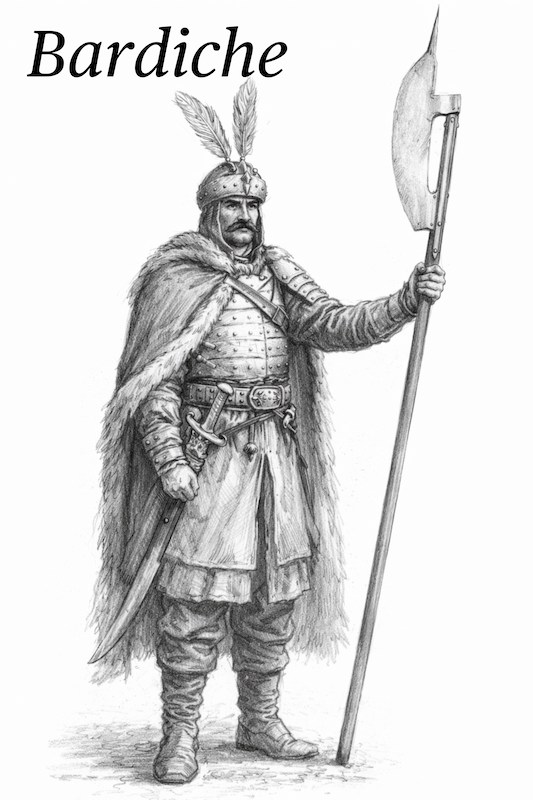
The bardiche is a large axe weapon associated especially with Eastern Europe and Russia. Its defining feature is an extended axe blade mounted along a substantial portion of the shaft, often with the lower part of the blade attached directly to the wood. This construction creates a broad cutting edge backed by considerable mass. Bardiches vary in haft length from relatively compact two-handed weapons to longer polearm-like forms.
For Project personnel, the long blade-to-shaft attachment provides the most useful recognition clue. The broad edge creates powerful cuts and can also serve as a physical barrier during close engagement. Heavy heads require committed body movement and strong recovery, so spacing becomes important when several users stand together. Record blade height, blade depth, lower attachment point, shaft length, butt fitting, and overall mass when it can be estimated safely. The quality of the large forged head can also provide intelligence about local smithing capacity and access to suitable iron or steel.
Morningstar
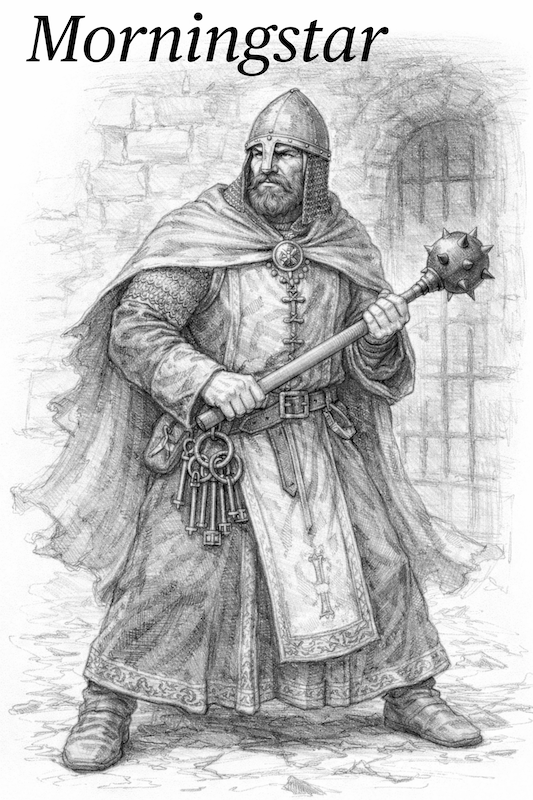
The morningstar is a rigid-shaft striking weapon fitted with a heavy head carrying spikes. The head can be spherical, faceted, or roughly club-shaped, and the shaft can range from one-handed mace length to a longer two-handed form. The rigid connection keeps the head aligned with the haft, allowing the wielder to accelerate and arrest the weapon predictably. The spikes concentrate portions of the impact into small areas while the mass of the head delivers the main blow.
Department 6 distinguishes the morningstar from articulated flails by the fixed head. That mechanical difference matters in a fight because the morningstar follows the movement of the shaft directly and recovers like a mace or heavy club. Longer versions can generate substantial force but require more room to swing. A useful field report records head diameter, spike number and length, shaft length, reinforcement, grip, and whether the weapon is carried one-handed or two-handed. A large ceremonial-looking head may still be fully functional, so construction and wear deserve more attention than ornament.
Longsword
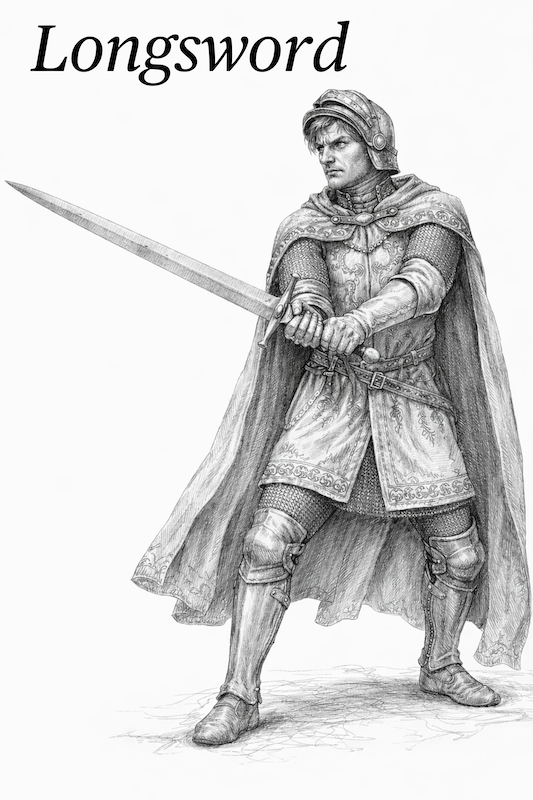
The longsword is a European straight double-edged sword with a grip built for regular two-handed use. Historical examples vary in blade length, width, taper, and point, yet the extended hilt remains central to the form. Two hands give the wielder fine control over the point, stronger leverage during blade contact, rapid changes of line, and greater acceleration during cuts. The weapon supports both cutting and thrusting and can be used at close distance by changing grip and leverage.
A Project member identifying a longsword can look first at the relationship between grip and blade. The hilt provides clear space for both hands, commonly behind a straight crossguard and ahead of a substantial pommel. Blade shape can reveal intended emphasis: broader blades favor cutting, while strong taper and stiff sections support thrusting. Record overall length, blade length, grip length, guard, pommel, point, fuller or ridge, and scabbard. A community maintaining effective longsword practice is also maintaining instruction, because the weapon rewards structured training in distance, timing, edge alignment, thrusting, binding, and close leverage.
Flail Staff
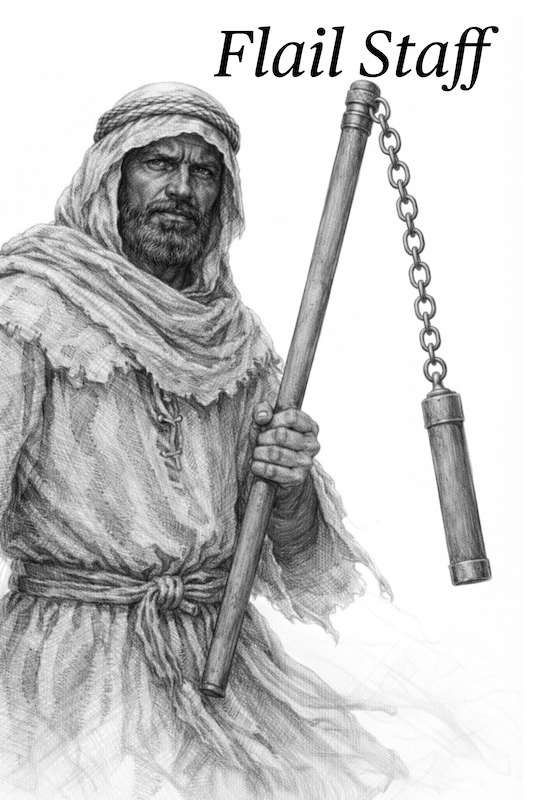
The flail staff is a long-handled articulated striking weapon in which a rigid staff connects by chain, hinge, or another flexible joint to a second striking member. The outer member may be a wooden bar, iron-shod cylinder, or other compact weight. Once the wielder accelerates the handle, the articulated head continues along its own path for part of the motion. That behavior can carry the striking member around a rigid guard or shield edge and produces an impact pattern different from a fixed club.
The same articulation also increases the amount of motion the wielder must manage. Recovery, changes of direction, and confined spaces demand experience because the outer member keeps moving after the hands begin another action. Historical military flails existed in several forms and with less standardization than swords or spears. Project personnel can record handle length, striking-member length and material, chain length, connection hardware, total reach, and whether the weapon is used singly or in formation. The articulation is the decisive recognition feature and separates the flail staff from the fixed-head morningstar.
Maillot
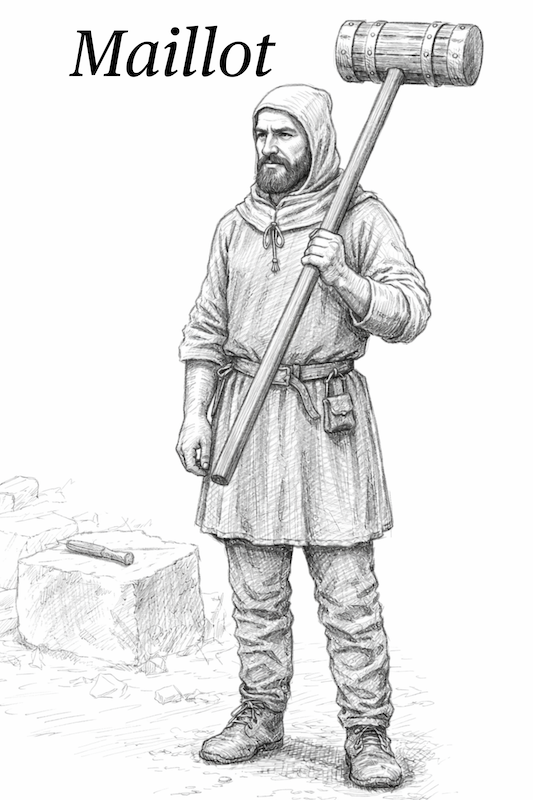
Maillot is used in Project field terminology for a heavy two-handed mallet or maul carried as a striking weapon. The basic construction is simple: a long haft drives a massive cylindrical or block-shaped head of hardwood, metal, or reinforced wood. The weapon converts the movement of the wielder’s shoulders, hips, and hands into momentum at the head. Its effectiveness depends on mass and leverage, and even a working tool built for driving stakes or heavy construction can produce severe injury when swung against a person.
The maillot often belongs to the border between tool and weapon. That makes context especially valuable. A labor crew may carry identical heads for ordinary work, while a militia may reinforce the same pattern with iron bands, longer grips, or dedicated weapon hafts. Project personnel can record head material, head dimensions, haft length, reinforcement, grip wear, and the owner’s occupation. The heavy head creates powerful committed strikes and slower recovery than a light staff. In confined quarters, the wielder may shorten the grip or use pushing and butt-end actions to manage the weapon’s size.
Godendag
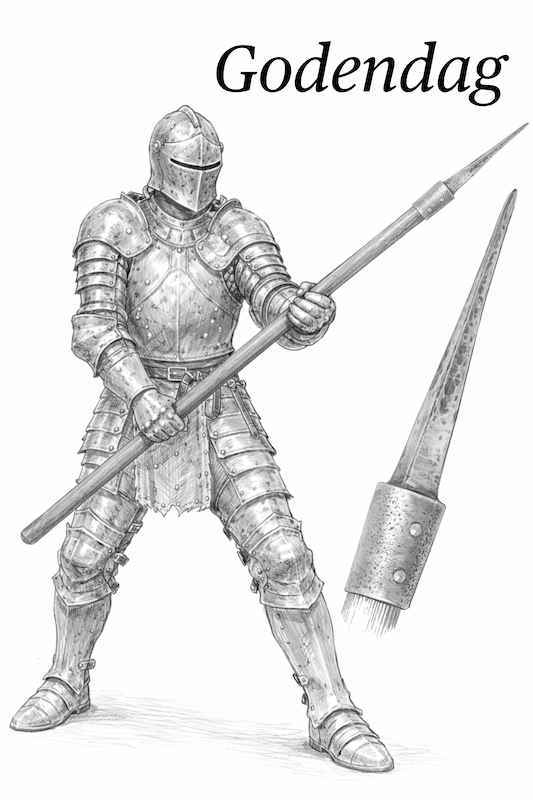
The godendag, also written goedendag, is a medieval Flemish militia weapon combining a heavy club-like staff with a thrusting spike. The classic form uses a stout wooden shaft that thickens toward the working end, where an iron cap supports a strong point. The design gives the wielder two direct methods of attack from one simple object: the body of the weapon strikes with club mass, and the terminal spike delivers thrusts. The construction suits militia production because it uses a large wooden component and a relatively compact forged iron fitting.
For Department 6, the godendag can reveal how a community equips large numbers of infantry with limited metal. A strong shaft and small but durable iron head demand less high-quality steel than a full sword blade. The weapon can also function effectively in groups because the spike threatens forward while the heavy body remains useful once distance closes. A field report can record total length, shaft diameter, location of maximum thickness, iron cap construction, spike length, and any surviving local name. Uniform dimensions across a unit indicate organized production and drill rather than casual conversion of household clubs.
Spetum
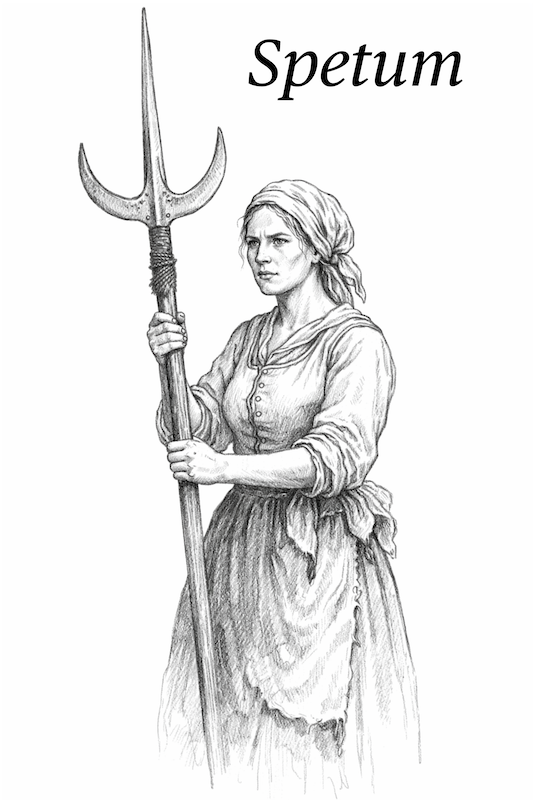
The spetum is a European thrusting polearm with a long central spear blade and two lateral blades or lugs projecting near its base. The side elements commonly angle outward or forward, creating a broad three-pointed head. The central point provides the main reach, while the side blades widen the threat area and can deflect, catch, or wound during close weapon contact. The form belongs to the same broad family as the ranseur and corsesca, with historical examples showing considerable overlap.
Project personnel can treat the side-blade geometry as the most useful recognition feature. Forward or outward projections create a different profile from the narrower lugs common on many ranseurs. During a bind, the widened head can trap another shaft or deny a direct path past the weapon. In formation, the large head also occupies more lateral space than a plain spear point. A report gains precision from central blade length, side-blade length and angle, socket construction, total shaft length, reinforcement, and local terminology. These measurements preserve the weapon’s functional identity even when a surviving name reflects later collectors or regional usage.
Using Weapon Descriptions in Intelligence Reports
The weapon name is the beginning of a useful report. The durable information lies in dimensions, construction, condition, ownership, and context. A description such as “single-edged forward-curving blade, approximately sixty centimeters long, guardless hilt with flared ears, carried in a decorated wooden scabbard and locally called a yataghan” gives another Department 6 member enough evidence to test the identification. The same method works for a polearm whose local name has shifted, a working tool adapted for defense, or a reproduction made from an old illustration. Measurements, photographs, rubbings, sketches, maker’s marks, local terminology, and the owner’s explanation can all preserve evidence for later comparison.
Melee weapons also describe the society that produces them. Long pikes imply drill space, standardized shafts, coordinated infantry, and a system for transporting awkward weapons. Fine swords imply smiths capable of heat treatment, grinding, fitting hilts, and producing scabbards. Agricultural weapons adapted for war connect militia practice to the ordinary tools of the countryside. Hooks and polearms may reflect fighting around horses, walls, gates, or crowded streets. Ceremonial weapons reveal rank and institutional memory. Department 6 gains the greatest value when the weapon is recorded as part of a working human system: who carries it, who makes it, who repairs it, where it is stored, how people train with it, and what authority its presence communicates.