
The Asymmetric Italian Aircraft of World War II: The Savoia-Marchetti SM.79 “Sparviero”
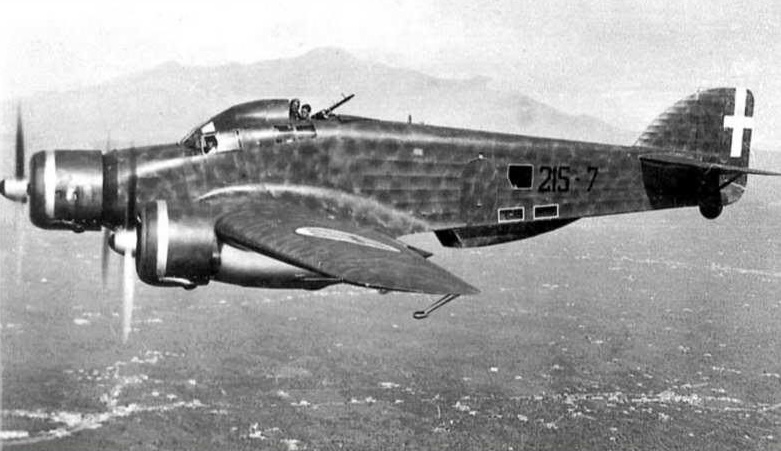
The Savoia-Marchetti SM.79 entered the war with a reputation for speed and a curious feature that set it apart from every other bomber in the Mediterranean skies: one wing was shorter than the other. Pilots who approached the aircraft for the first time often stopped beneath the broad fuselage hump and looked twice, believing the light or the angle had tricked them. But the imbalance was real, the result of an engineering compromise made quietly in the factory at Sesto Calende long before the Sparviero flew its most celebrated missions.
During its development, the designers at Savoia-Marchetti found themselves wrestling with the internal layout of the left side of the aircraft. To give the crew better passage behind the cockpit and to accommodate a large fuel tank and equipment bays, weight shifted subtly away from the centerline. Rather than redesign the entire fuselage, the engineers chose a simpler solution: the right wing would be lengthened slightly, and the left reduced, restoring balance through aerodynamics rather than structure. The change amounted to no more than a handful of centimeters, but it created an unmistakable asymmetry visible to anyone who knew what to look for.
In the air, however, the SM.79 behaved beautifully. Its three Alfa Romeo radial engines, mounted along the unstressed wooden frame and fabric-covered wings, pushed the aircraft to speeds that surprised many Allied pilots. The distinctive dorsal hump—an inheritance from the early passenger prototype—housed a heavy machine gun that swept the sky behind the bomber. Though the interior was cramped and often sweltering, crews spoke of the aircraft with a respect that bordered on affection, for the Sparviero carried them through missions that would have broken lesser machines.
Nowhere was its reputation more firmly won than over the waters of the Mediterranean. Flying low enough for the sea spray to streak their canopies, Italian aerosiluranti units guided their torpedoes toward British convoys with a precision earned through training and daring. The SM.79’s speed at sea level and its rugged build made it the ideal mount for these attacks. Allied sailors came to fear the sudden appearance of the humped silhouette racing toward them, engines wide open, wings shimmering in the sun—unequal but deadly.
The aircraft served on many fronts, from the deserts of North Africa to the Balkans, and even found export customers in Romania and Iraq. By the time production ended, more than thirteen hundred had rolled out of Italian factories, a testament to its reliability and adaptability. Some continued flying in civilian and military roles after the war, their patched and faded hulls bearing witness to an era when Italy’s aviation industry reached for ambitious designs and sometimes solved problems with unconventional elegance.
Today, the SM.79’s uneven wingspan is often mentioned as a curiosity, a mechanical quirk from a turbulent period. Yet this small asymmetry embodies the story of the Sparviero itself: practical, resourceful, and braver in the air than its modest lines might first suggest. It was a bomber shaped by necessity and sharpened by combat, and its place in the history of wartime aviation remains secure—not despite its odd construction, but in part because of it.
Italian Airpower in WW2 (Amazon)