

Firearms Beyond Project Issue
Internal Personnel Reference — Department 6 Distribution
The firearms encountered by Project personnel in 2190 belong to several different technological economies. Some are new weapons produced by organized states with arsenals, standard ammunition, and formal military schools. Others come from village workshops that maintain a successful design for generations through repeated repair. Salvage guns combine surviving pre-Fall components with barrels, stocks, springs, ammunition, and operating systems made after the Fall. Black-powder weapons remain important because their ammunition can be supported by comparatively modest industry, while a few exceptional workshops preserve pneumatic systems or other demanding mechanisms. Identifying the weapon therefore gives a Troubleshooter information about the people, workshops, trade routes, and supply systems standing behind it.
Department 6 treats visual recognition as the beginning of the assessment. The useful questions concern the action, ammunition family, number of shots available before the weapon requires substantial attention, quality of manufacture, state of repair, and the owner’s likely access to replacement parts. A firearm seen in a market may represent ordinary civilian trade, while the same pattern carried uniformly by a disciplined company indicates arsenals, training, and ammunition supply. A strange old receiver fitted with new wood can show that a community understands salvage deeply enough to turn pre-Fall material into a weapon suited to the present economy. A simple flintlock can reveal an equally important strength when local smiths, powder makers, and lead casters can keep it operating indefinitely.
The weapons below are drawn from Department 6 source material describing the Coastal Empire, the GoKabi, the Dwarrow, Great Lakes manufacture, western trade, salvage gunsmithing, and independent specialist production. They are firearms made, rebuilt, or maintained outside Project Negentropy. Project personnel may encounter examples in military service, caravan defense, hunting, policing, trade, or private ownership, and their value as intelligence often extends well beyond their immediate combat capability.
Coastal Empire Armory Model 2180 Family
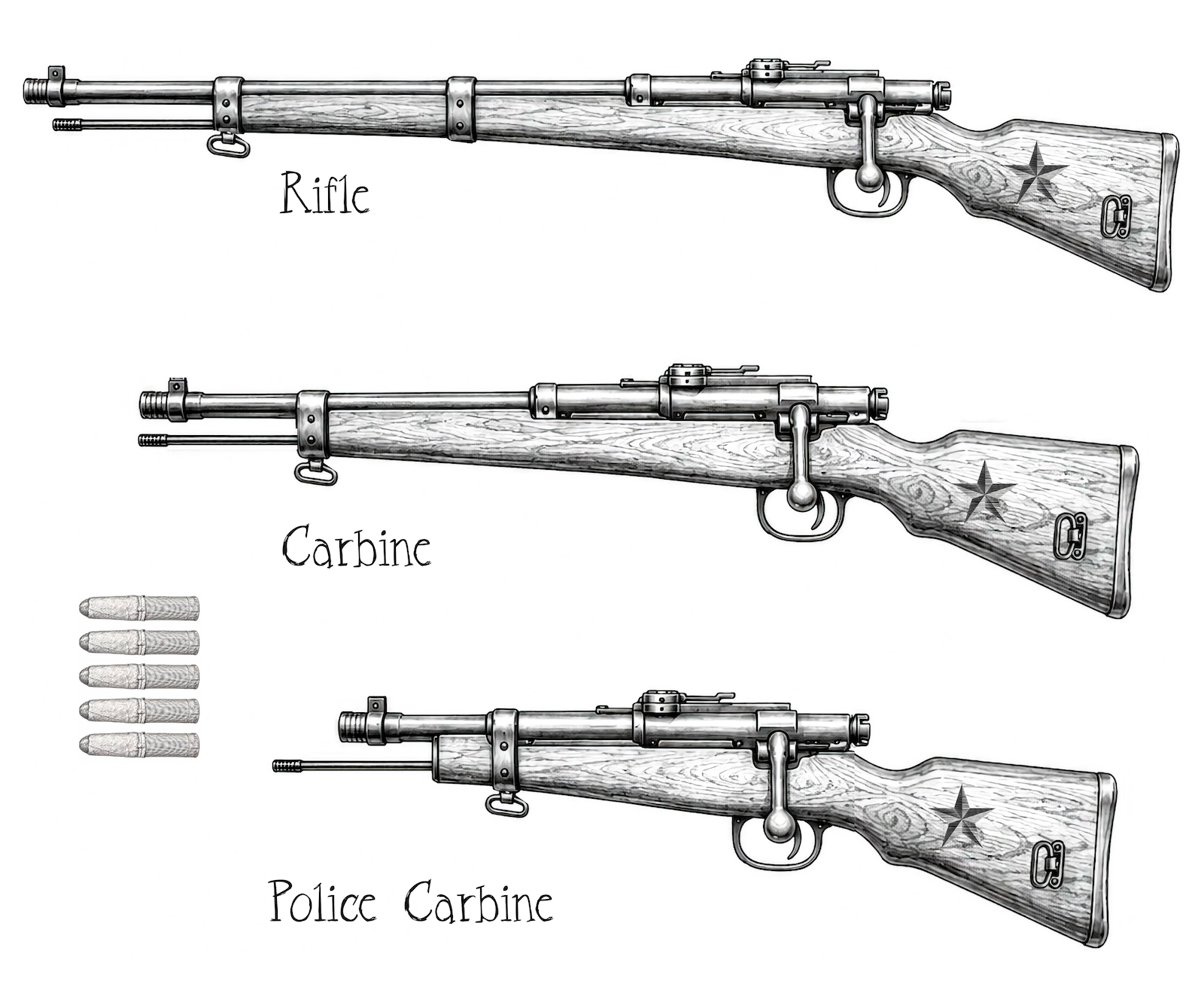
The Coastal Empire’s Armory Model 2180 family is one of the clearest signs of a mature post-Fall military industry. Savannah Armory manufactures a full-length infantry rifle, a shorter carbine, and a compact police version around the same basic breech-loading system. All three use the Imperial 11 mm paper-cartridge family and share major internal dimensions. The weapon therefore appears in several branches of Imperial service while preserving a common supply and maintenance base. A Project member who sees one version can expect closely related actions in Imperial infantry, cavalry, guard, and police service.
The Model 2180 is a single-shot weapon, yet its importance comes from standardization rather than magazine capacity. The Empire can issue a common ammunition family, train armorers on one mechanism, manufacture related weapons in different lengths, and move parts through a formal military supply system. Full infantry rifles indicate troops expected to fight across open ground and organized firing lines. Carbines accompany more mobile soldiers and mounted units, while the police pattern suits streets, gates, vehicles, and buildings. The rifles carry a recognizable Imperial identity as well as a mechanical one, so their presence can establish military ownership, government supply, or the movement of Imperial arms into civilian hands.
Imperial 11 mm Ordnance Revolver
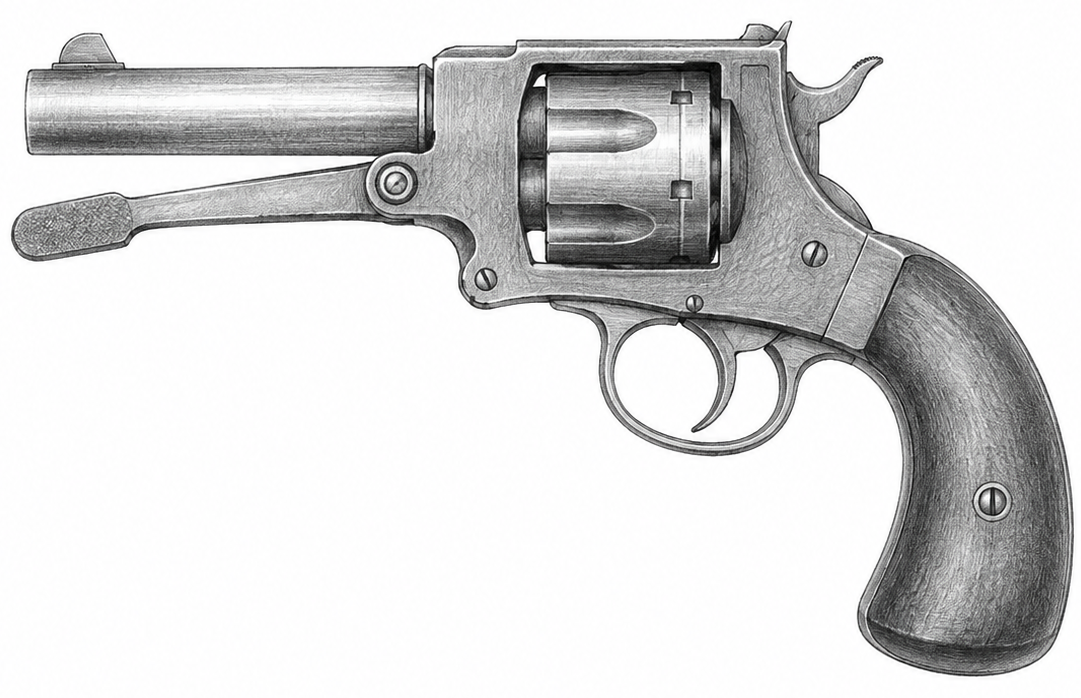
The Imperial 11 mm Ordnance Revolver is the principal heavy sidearm associated with Coastal Empire officers, mounted personnel, and selected leaders. Its large frame, five-shot cylinder, curved bird’s-head grip, and long lever beneath the barrel give it an immediately recognizable silhouette. The revolver belongs to the same ammunition economy as the Armory rifles because the Empire standardizes the 11 mm projectile even though the handgun cartridge carries a smaller charge. This common bullet simplifies production while preserving ammunition appropriate to two very different weapons.
The removable cylinder is especially important to field recognition. Imperial users can carry prepared spare cylinders as part of their equipment, turning the cylinder itself into a carefully manufactured magazine component that receives attention from armorers and supply clerks. The weapon’s cost and military ownership give it social meaning. An Ordnance Revolver on a frontier road commonly identifies an Imperial officer, an authorized government servant, or a person who has obtained valuable military property. Department 6 personnel can therefore treat the revolver as evidence of institutional connection and can pay close attention to serial marks, spare-cylinder carriers, holsters, and the condition of the weapon when reconstructing its history.
GoKabi Defender Rifle
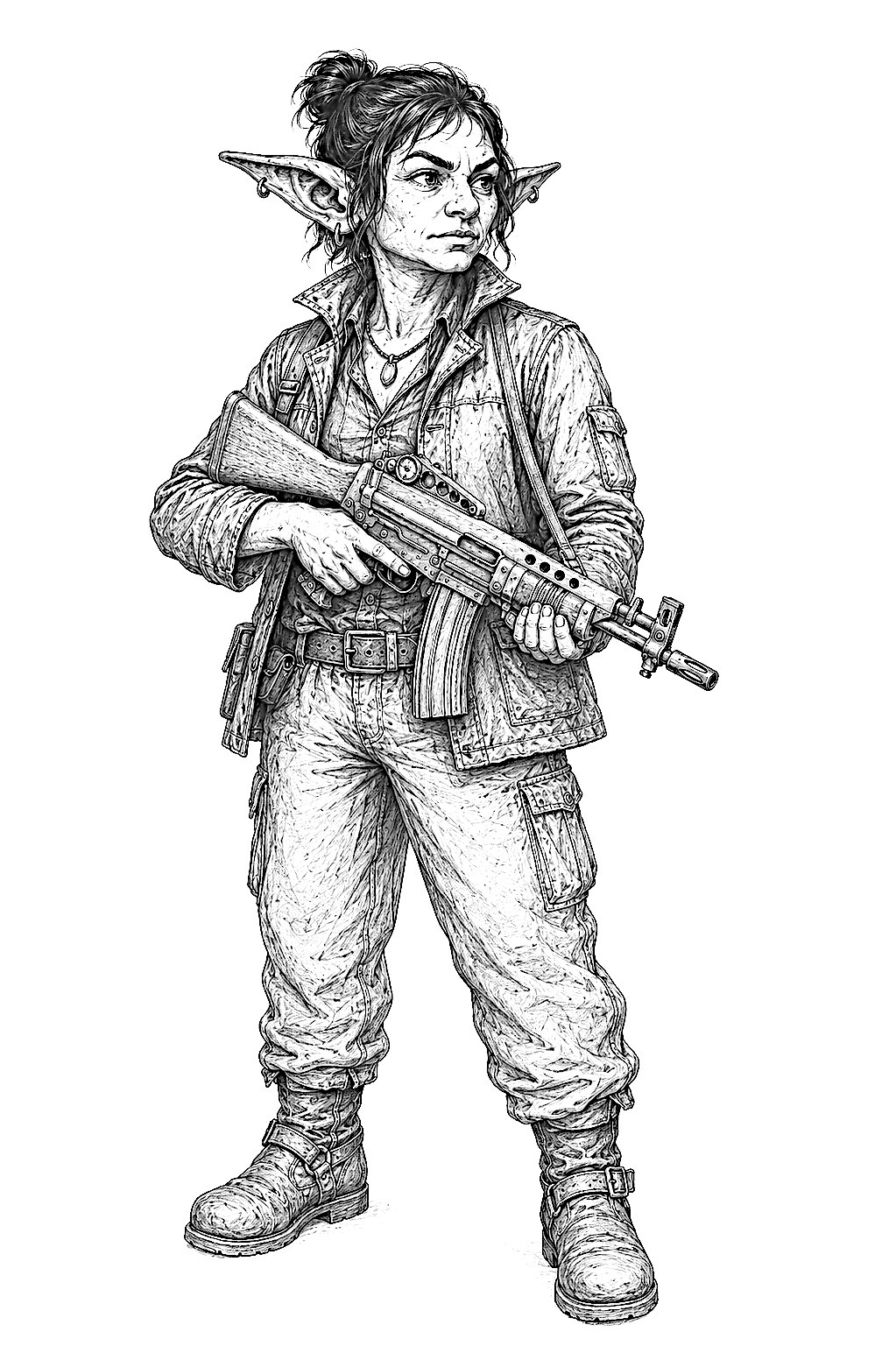
The Defender Rifle reflects GoKabi workshop culture more clearly than a rigid factory model number would. Its receiver and operating system define a recognizable family, while barrels, stocks, sights, grips, and fittings change throughout the life of an individual weapon. Common chamberings use closely related cartridge cases in several calibers, allowing GoKabi workshops to support different roles from a shared manufacturing base. The rifle’s short-stroke gas system and rotating bolt belong to a durable mechanical core that GoKabi Tinkers understand well enough to rebuild repeatedly.
A Project member examining a Defender Rifle can expect visible evidence of ownership and maintenance. Stocks may be shortened, rebuilt, opened into skeletal forms, or altered around the user’s body. Sights and optics change according to work, and repaired fore-ends or replacement barrels may record decades of service. The weapon is compact because it is proportioned for GoKabi bodies, giving a human user an unusually short length of pull and close control spacing. The important intelligence lies in the continuity beneath those changes: a rifle that appears highly individualized can still belong to a widely understood GoKabi system supported by villages, corporations, ammunition makers, and Tinkers who share the necessary knowledge.
Cog’s Clever Carbine
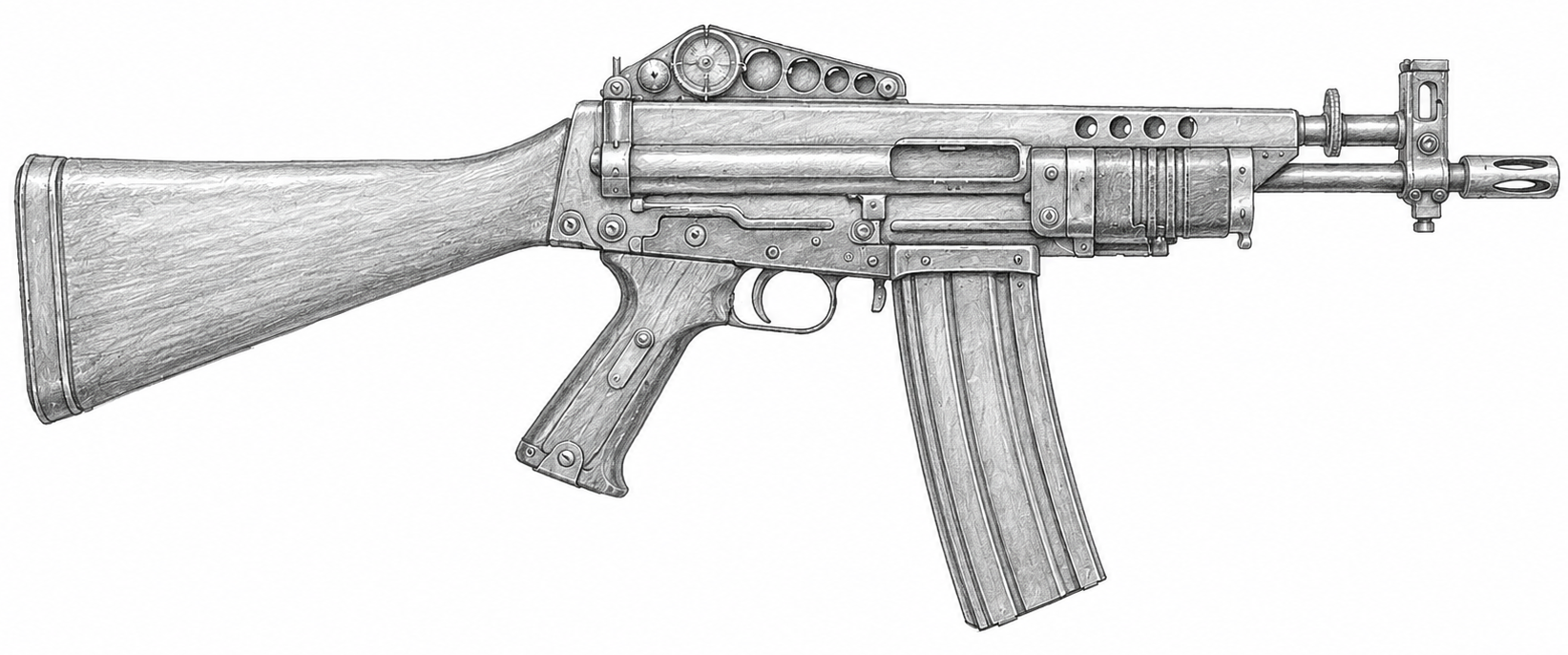
Cog’s Clever Carbine is a compact GoKabi shoulder arm developed around a receiver intended to support several chamberings and long-term workshop rebuilding. The common 6×25 mm version uses a thirty-round detachable magazine and emphasizes manageable recoil, compact dimensions, and repeated fire at the close and intermediate distances common around villages, traction engines, caravans, and workshops. Heavier chamberings exist within the same family, and GoKabi corporations can reconfigure an established weapon when an owner’s work changes.
The carbine illustrates how GoKabi standardization works in practice. The receiver and operating principle remain recognizable while sights, stocks, fore-ends, trigger characteristics, and accessories become individual. A veteran Defender may carry a weapon whose furniture differs sharply from the rifle that left the original workshop, yet a GoKabi Tinker can still recognize the family and understand the changes. Department 6 personnel can use that pattern when assessing GoKabi arms: variation in appearance often reflects a mature repair culture and personal fitting, while shared receivers, ammunition families, and operating systems reveal the deeper industrial standard.
Dwarrow Double-Barrel Flintlock Rifle
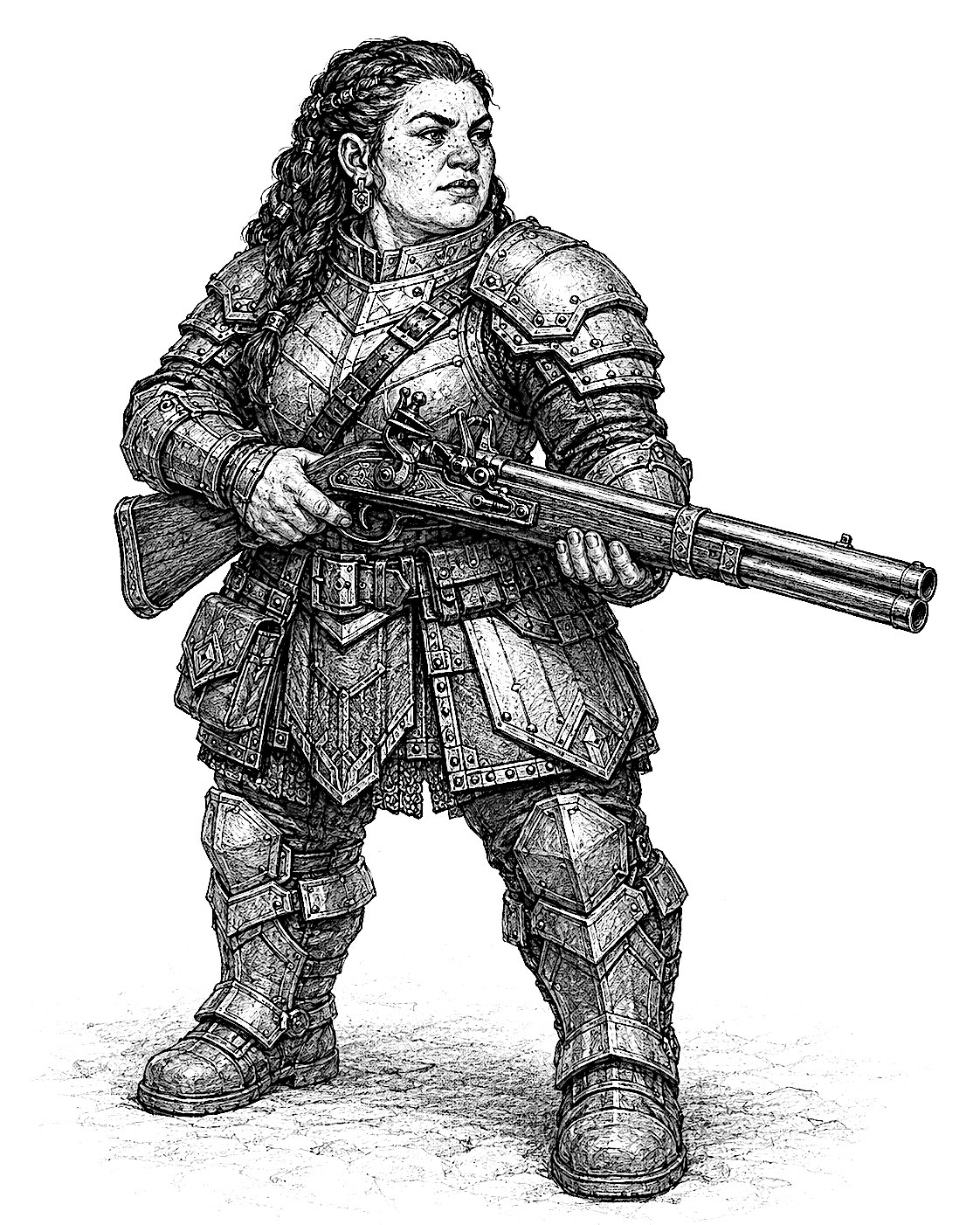
The characteristic Dwarrow firearm combines Dwarrow metallurgy with GoKabi precision work. Dwarrow smiths provide strong barrels and major steel components, while GoKabi workshops commonly supply the locks. Two rifled barrels give the user two immediately available shots before the slower work of reloading becomes necessary. The arrangement suits Dwarrow fighting conditions because a second shot carries unusual value in tunnels, gates, mine passages, and other confined spaces where an approaching enemy may cross the remaining distance very quickly.
Dwarrow strength allows the weapon to carry two strongly built barrels with less concern for the weight that would trouble many human riflemen. The flintlock system also fits the Steading economy. Dwarrow communities can manufacture black powder, cast projectiles, maintain barrels, and obtain lock work through established GoKabi trade, creating a firearm whose supply chain can continue through ordinary regional industry. The weapon often appears alongside compact hammers or picks, producing a practical sequence in which the rifle handles the approach and a hand weapon remains available once the passage closes. For intelligence purposes, the rifle demonstrates cooperation between two technically capable peoples and reveals a military system designed around the physical realities of underground ground.
Wilmington Special Revolver
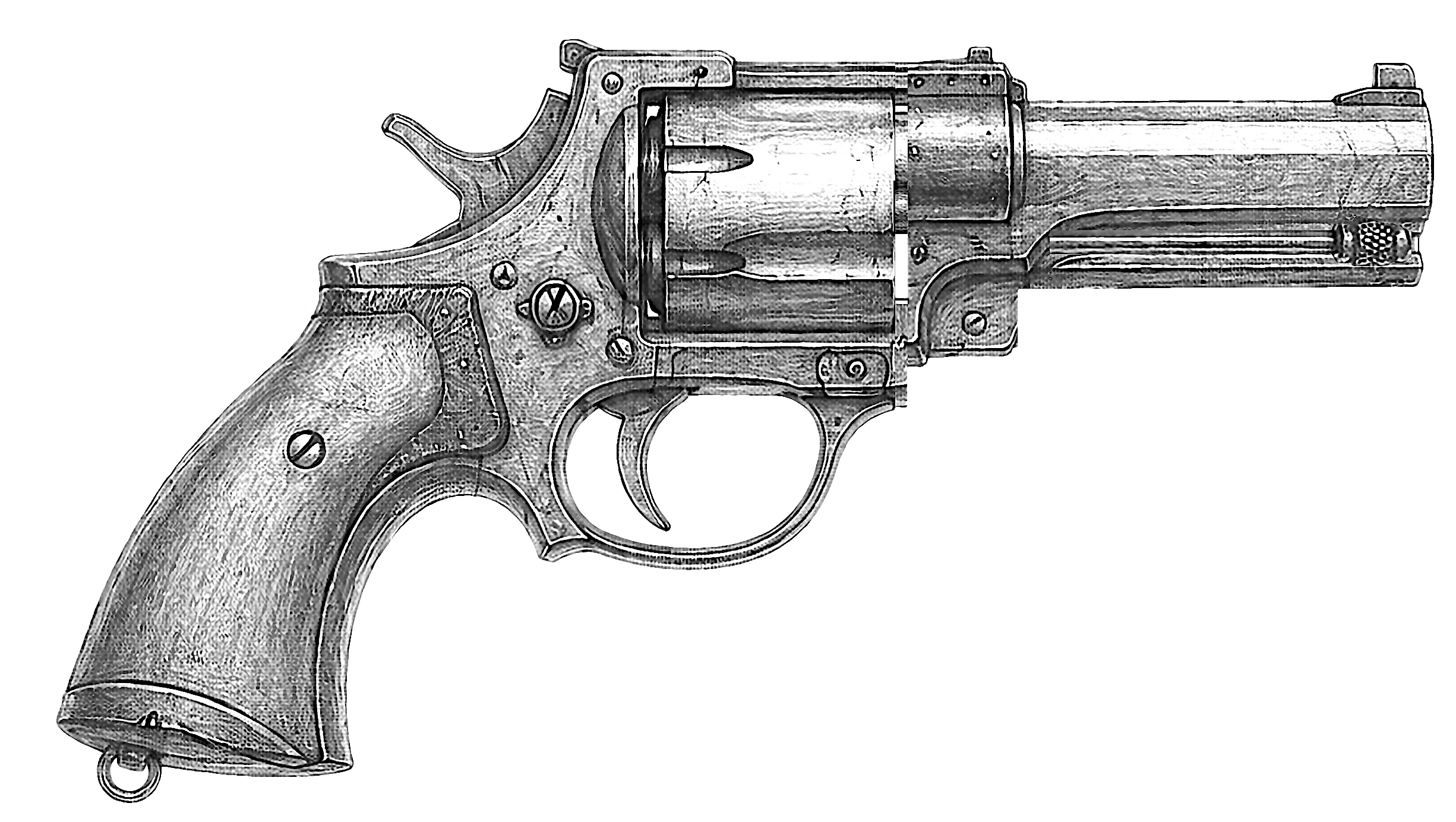
The Wilmington Special is a robust five-shot firearm featuring a swing-out cylinder mechanism. The cylinder is secured in place by a metal pin that is disengaged to allow the cylinder to swing outward. This firearm operates on a single-action mechanism and is available in four calibers, including 9mm SC, 9mm LC, 10mm SC, and 11mm SC. The SC caliber is a short-chamber firearm that is loaded from the front of the cylinder with a combination of shot and powder. The LC caliber boasts a larger chamber capacity, enabling the use of high-velocity loads. The 11mm caliber utilizes the heavy Empire standard cast lead bullet. The Wilmington Special is constructed with a brass frame, a steel cylinder, and a shrouded barrel.
Wilmington Special Carbine
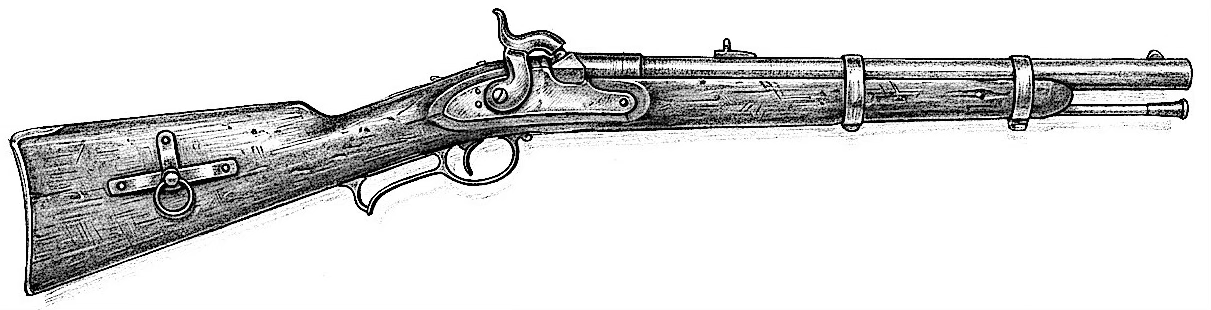
The Harbor Two-Band Carbine is a muzzle-loading rifle characterized by its short barrel and firing-cap mechanism. Despite its relatively low cost, it serves as a practical field weapon primarily utilized by Imperial merchants. The carbine fires a substantial 15.6mm conical bullet down a rifled barrel, although it frequently employs 16-gram 7mm lead balls, functioning as a shotgun. A two-sided waxed cardboard cartridge, containing both shot and powder, is employed. The operator initiates the loading process by pouring in the powder, followed by an included fiber wad, then the shot, and finally the second wad. The waxed cardboard cartridge is often employed to safeguard the load from moisture. Notably, the red cardboard cartridge case has earned the carbine the affectionate moniker “Flower Gun.”
Chuhopi 8mm Carbine
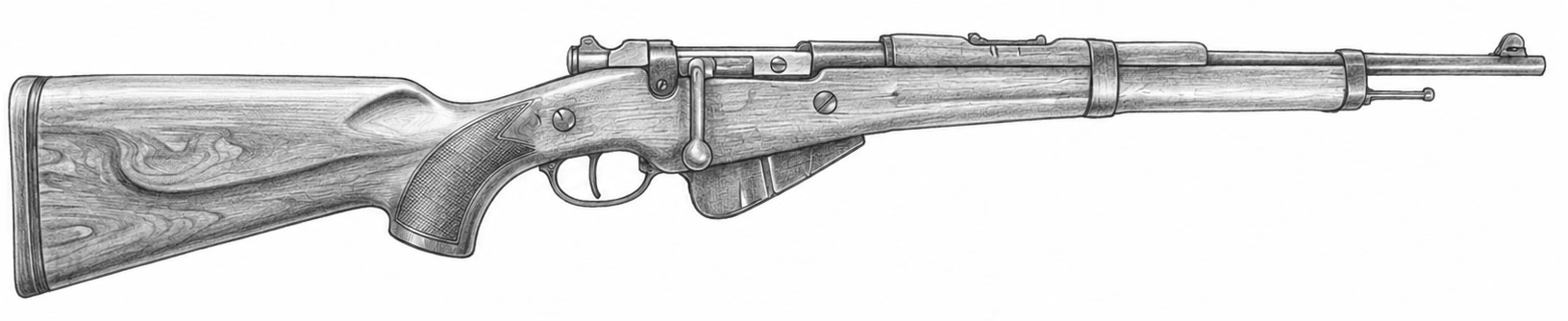
The Chuhopi Carbine is the characteristic firearm of the Chuhopi and one of the objects most readily associated with them by neighboring peoples. It is a manually operated repeating carbine with a wooden stock and fore-end, open sights, and a five-round en bloc clip. The clip enters the weapon as a complete unit and holds five brass cartridges, each carrying a lead bullet. Chuhopi maintain their carbines carefully and commonly keep the same weapon for long periods, so wear on the stock, fittings, and metal often reflects years of travel and use rather than neglect. A carbine found with a Chuhopi camp, patrol, or traveler is consequently recognizable as both a practical weapon and a piece of personal equipment with an individual history.
A Chuhopi does not ordinarily obtain a carbine through an open market or routine distribution. The place from which the carbines ultimately come is not generally known. A Chuhopi seeking one undertakes a quest to acquire it. The journey, the people encountered, and the acts required to return with the weapon belong to the experience of the person who carries it, while outsiders usually see only the result: a Chuhopi departs without a carbine and later returns carrying one. The weapon therefore has a cultural identity that extends beyond its usefulness in hunting or fighting. Possession shows that its bearer has gone out into the wider world, pursued the means of obtaining the weapon, and successfully brought it home.
This history affects how Chuhopi treat the carbine. It is personal in a culture where many other resources can be shared, exchanged, or assigned according to immediate need. Losing one carries significance beyond the loss of a firearm because another cannot simply be drawn from a village store or purchased from the next merchant. Capturing a Chuhopi carbine also produces questions about its bearer: who owned it, how it left that person's possession, and whether the owner was killed, robbed, captured, or forced to surrender it. A Chuhopi who recognizes another person's carbine may therefore recognize evidence of an event before anyone examines the ammunition or asks where the weapon was found.
The five-round en bloc clip also gives Chuhopi ammunition a recognizable physical form. A complete clip keeps five brass cartridges together for loading, while fired bullets, cartridge cases, damaged clips, and unfired cartridges can remain at a shooting site. Investigators who already know Chuhopi weapons can associate such material with a Chuhopi carbine, although the weapon's presence alone does not identify the person who fired it. A stolen or captured carbine can be used by anyone capable of operating it. In Blackhawk, that distinction is especially important because a Chuhopi carbine can identify the kind of weapon used while the circumstances of its loss, theft, or capture determine who actually possessed it when the shot was fired.
Northern Alliance NA9 Revolver
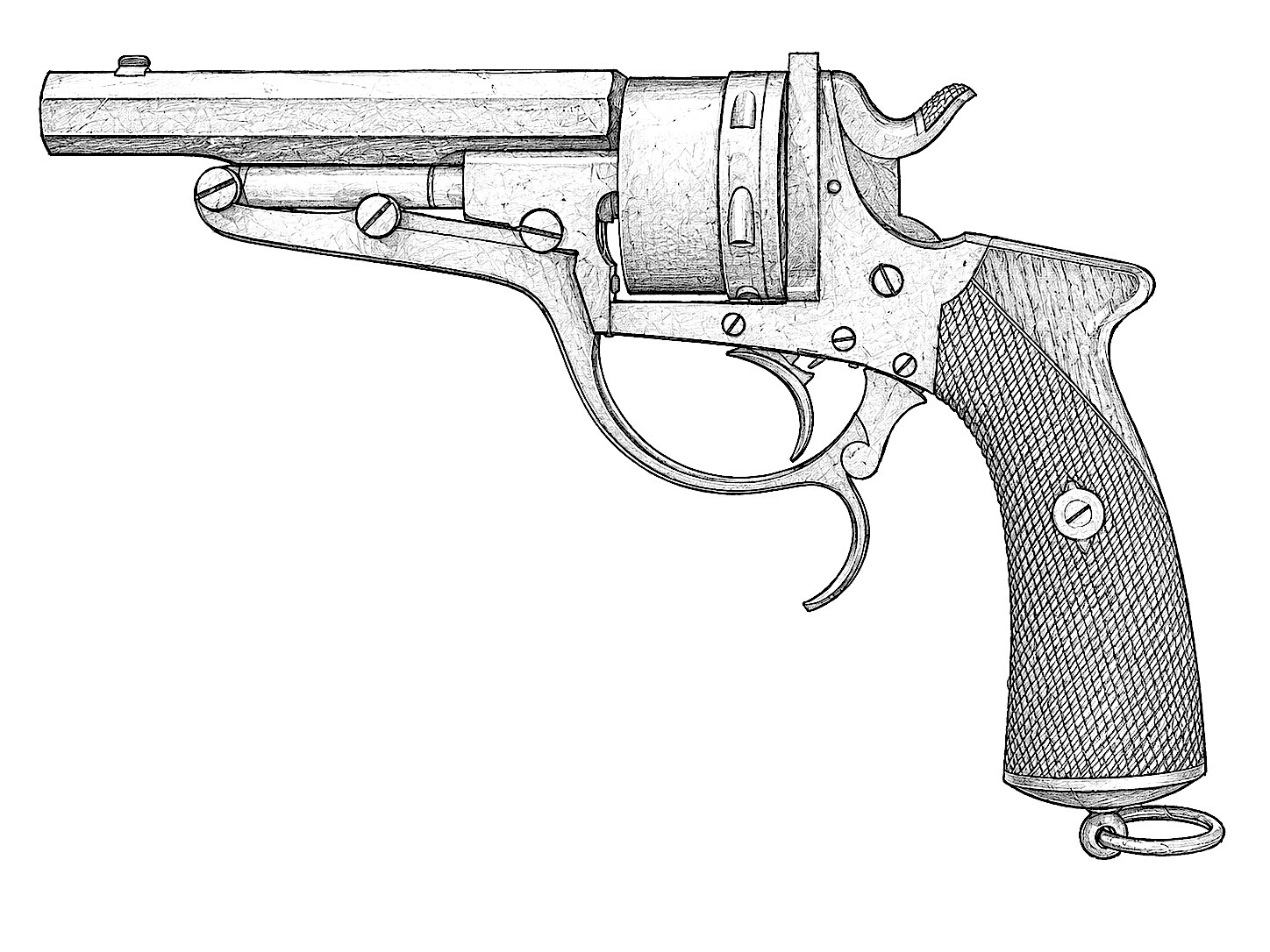
The NA9 is a six-shot 9 mm percussion revolver manufactured in large numbers by the Northern Alliance and distributed through Great Lakes trade. Its power is modest beside heavier military handguns, while its low cost, manageable recoil, simple maintenance, and broad availability make it one of the region’s important civilian firearms. Traders can support the weapon with common black powder, percussion caps, and lead, so the revolver remains useful far from the factory that produced it.
The NA9’s break-open frame and removable cylinder are valuable recognition features. Owners can remove the cylinder for service and may carry prepared spare cylinders when they expect trouble. The revolver’s importance comes from prevalence: sailors, merchants, guards, riders, and local militia members can acquire one without the institutional connection demanded by an Imperial service weapon. Department 6 can therefore read an NA9 as evidence of Great Lakes commerce more readily than evidence of a particular government assignment. Condition, maker’s marks, spare cylinders, local ammunition, and the route by which the owner obtained the weapon can help trace trade connections across the region.
SAR-15 Salvage Rifle
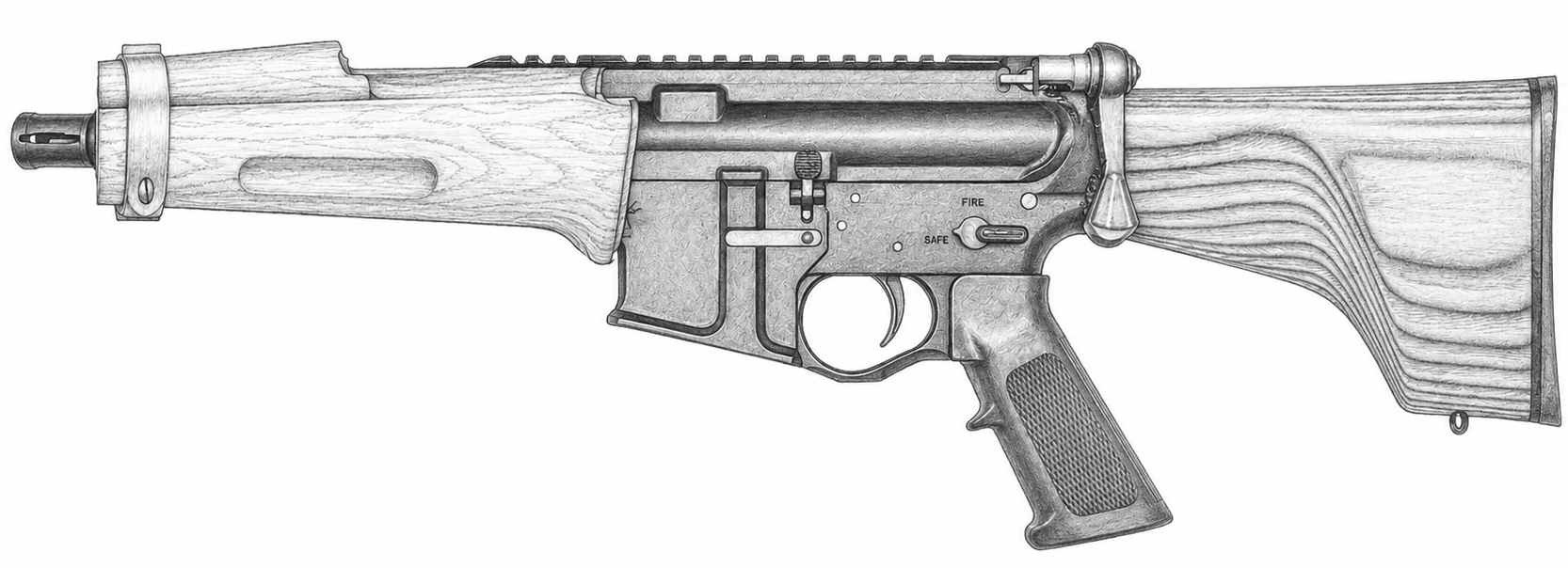
The SAR-15 Salvage Rifle shows how post-Fall gunsmiths turn durable pre-Fall components into a contemporary firearm. The surviving aluminum receiver of an AR-15 provides the foundation, while the finished weapon uses a new 9 mm barrel, locally made furniture, replacement fittings, and a manually operated action chambered for 9×35 mm Salvage ammunition. The result retains the unmistakable outline of a pre-Fall receiver while functioning within an ammunition and repair economy built around black powder, cast lead, salvaged brass, wood, and parts that modern workshops can make.
There is no single factory specification for the SAR-15. Individual gunsmiths retain whatever serviceable original parts remain and replace the rest according to available materials and local practice. Two examples can therefore differ in barrel length, stock shape, sights, controls, and the proportion of salvaged material. Their common identity lies in the surviving AR-pattern receiver, the 9×35 mm Salvage cartridge, and the manual action adopted for dependable operation with contemporary ammunition. For Department 6, an SAR-15 is evidence of organized salvage, ammunition conversion, and gunsmithing skill. Its presence can indicate nearby access to pre-Fall stores or a trade network that moves receivers and recovered brass between specialized workshops.
Samely Sorbonne Monster Hunter
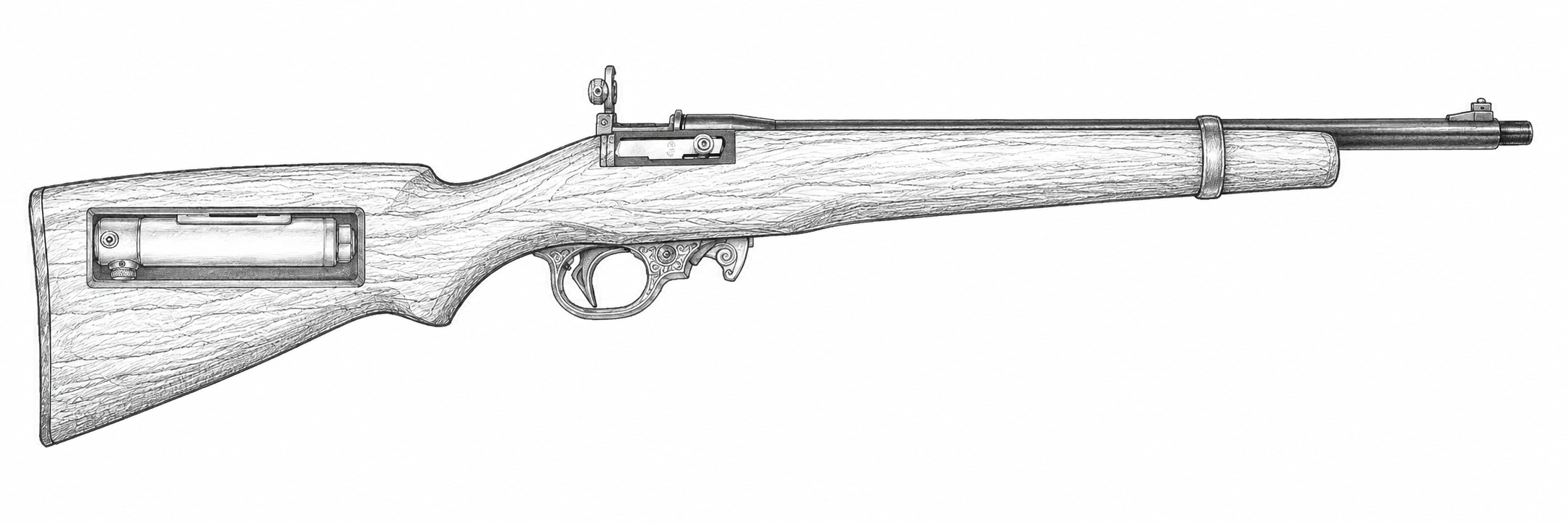
The Monster Hunter is an 11 mm high-power air rifle manufactured in limited numbers by Samely Sorbonne at Porte-la-Terre. It uses the same general projectile size found in Coastal Empire service while obtaining its energy from compressed air stored in a removable cylinder housed in the stock. Each rifle belongs to a larger equipment system that includes reusable pressure cylinders and the workshop equipment required to recharge and service them. This gives the weapon a very different logistical signature from black-powder rifles: bullets remain necessary, while powder, primers, and cartridge cases disappear from the immediate ammunition supply.
The rifle’s accuracy, close-fitting components, regulated air system, and precision barrel make it a specialist weapon whose support requirements matter as much as its performance. A working Monster Hunter implies access to careful mechanical maintenance and to a compressor capable of charging its cylinders. Owners who travel far from Porte-la-Terre therefore treat the pressure vessels and special service equipment as essential parts of the weapon. Department 6 personnel can recognize the stock compartment for the air cylinder, the refined sights, and the unusually careful construction. The name Samely Sorbonne also carries intelligence value because genuine rifles originate from his workshops and circulate in limited numbers through hunters and wealthy clients.
Havenite 12 mm Thunder Pistol
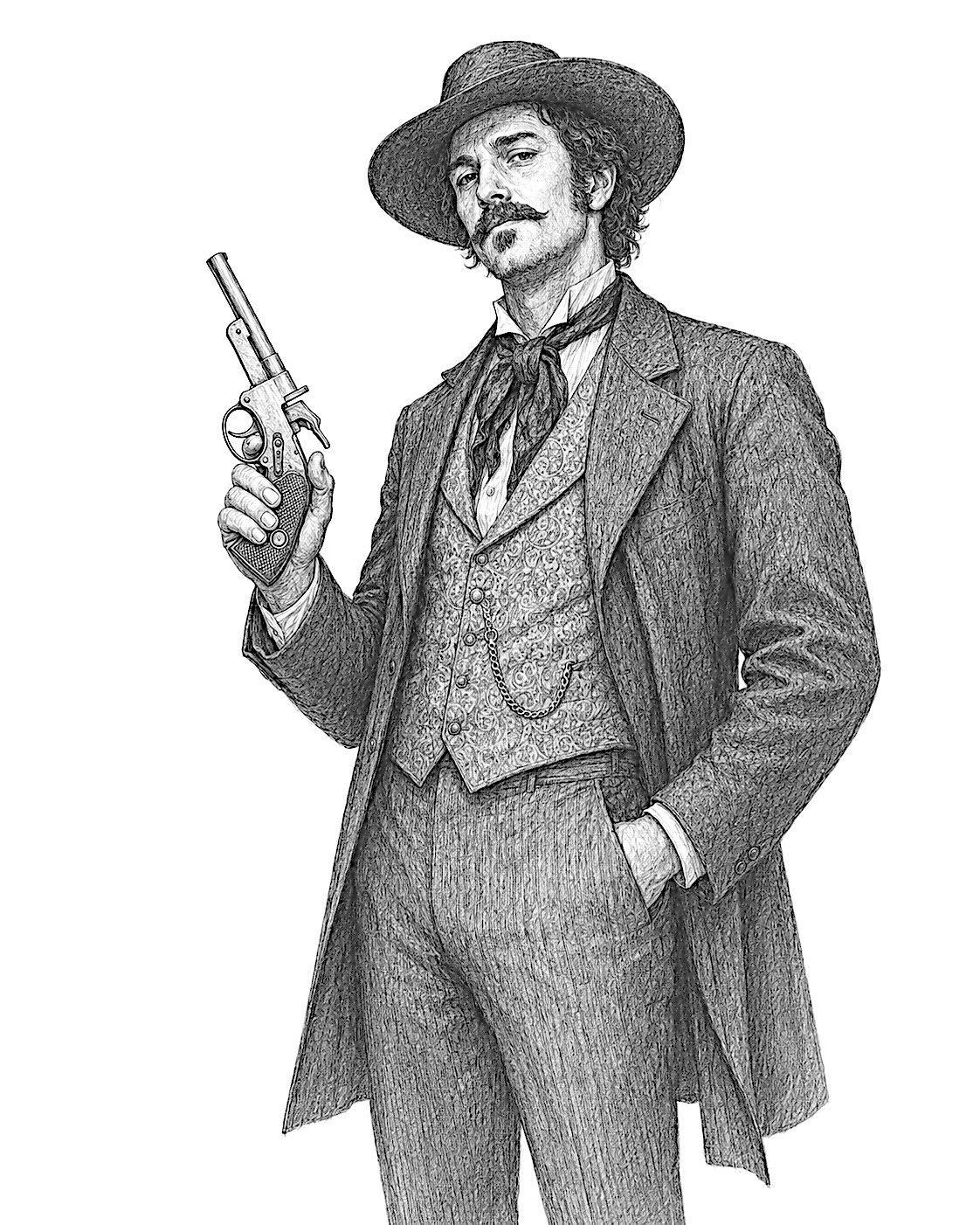
The Havenite 12 mm pistol, commonly called the Thunder Pistol, is a heavy single-shot handgun exported through the Great Lakes. Havenite manufacture emphasizes robust metalwork, straightforward mechanisms, and an ammunition system that remains supportable far from Haven. The pistol uses a strong falling-block breech and a substantial rifled barrel. Its size and mass make it a deliberate sidearm suited to travelers, guards, ship officers, hunters, and merchants who value durability and a powerful single shot.
The Thunder Pistol’s ammunition system explains much of its regional success. Standard equipment uses reusable cartridge bodies that can be replenished with black powder, lead, and percussion caps available through ordinary Great Lakes commerce, and the pistol can remain useful in communities whose industrial capacity varies widely. The trade-off is obvious in its role: the owner receives one shot before the weapon requires attention, so some travelers carry a pair when they expect immediate danger. Department 6 can identify Havenite manufacture through the heavy frame, falling-block action, large bore, and quality of the fittings. The weapon’s presence often points toward Great Lakes trade even when the current owner has never visited Haven.
Western Model 28 Shotgun

The Western Model 28 is a four-shot repeating shotgun manufactured in the far west and carried east in limited numbers by Free Traders. Its lever action works with a four-chamber revolving cylinder, giving the user several shots before the cylinder must be replaced or replenished. The weapon uses a 14 mm paper shot cartridge that can also be manufactured in Imperial cities, an important fact because a Model 28 can remain supplied after traveling far from the workshops that built it.
The Model 28 therefore combines exotic origin with practical ammunition support. High-quality metal and hardwood, a substantial receiver, and the unusual revolving shotgun action make the weapon easy to recognize once examined closely. Short and long barrel versions exist, and owners may carry spare cylinders when they expect sustained use. Department 6 should pay attention to receiver markings, cylinder construction, barrel length, Free Trader provenance, and the ammunition found with the weapon. A Model 28 in the east can document a long-distance commercial connection stretching across much of the continent, while several examples in one place may indicate an established western supply relationship rather than an isolated purchase.
18.5 mm Break Gun
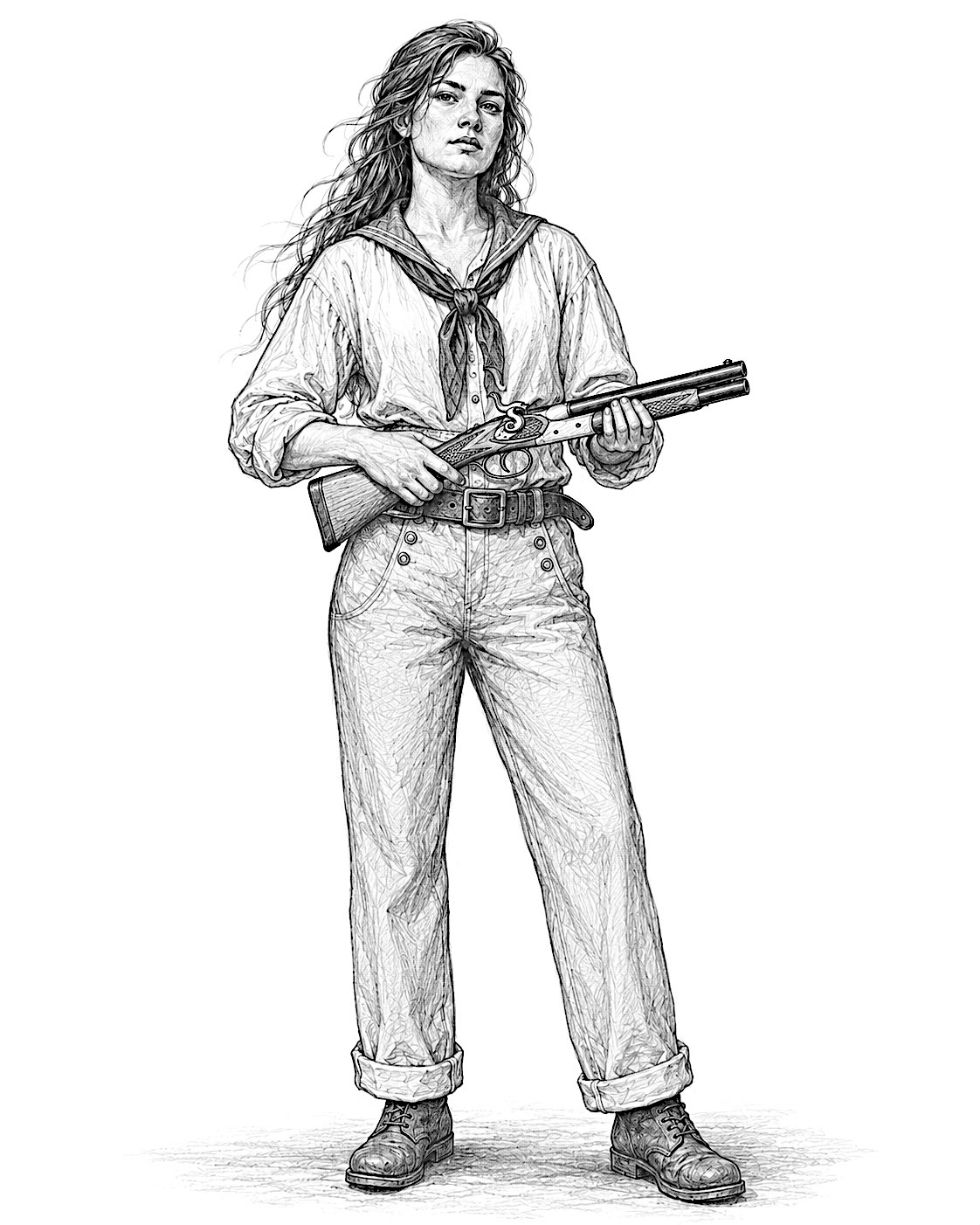
The Break Gun is a widely manufactured two-barrel shotgun chambered for an 18.5×75 mm black-powder paper shell. Numerous workshops build versions of the same simple pattern, creating differences in finish and workmanship while preserving a familiar break-open action with exposed hammers. Short barrels make the weapon convenient aboard boats, around wagons and buildings, and in dense vegetation; longer hunting barrels appear where open-country shooting matters more. Its modest manufacturing requirements allow competent regional gunsmiths to keep the design in production and repair it with ordinary tools and locally made parts.
Project personnel have a specific reason to identify this weapon correctly. Break Gun ammunition and Project 18.5×75 mm shotgun ammunition share enough external dimensions to create dangerous compatibility, while their pressure levels belong to different weapon systems. A Project smokeless shell can exceed the strength for which a black-powder Break Gun was built. The reverse combination places a lower-pressure black-powder shell in a stronger Project shotgun and produces heavy fouling and corrosive residue. Department 6 can prevent accidents by treating ammunition provenance, case construction, markings, and weapon proof as part of the identification process whenever 18.5 mm shotguns and mixed stores are encountered together.
18.5 mm Spark Lock
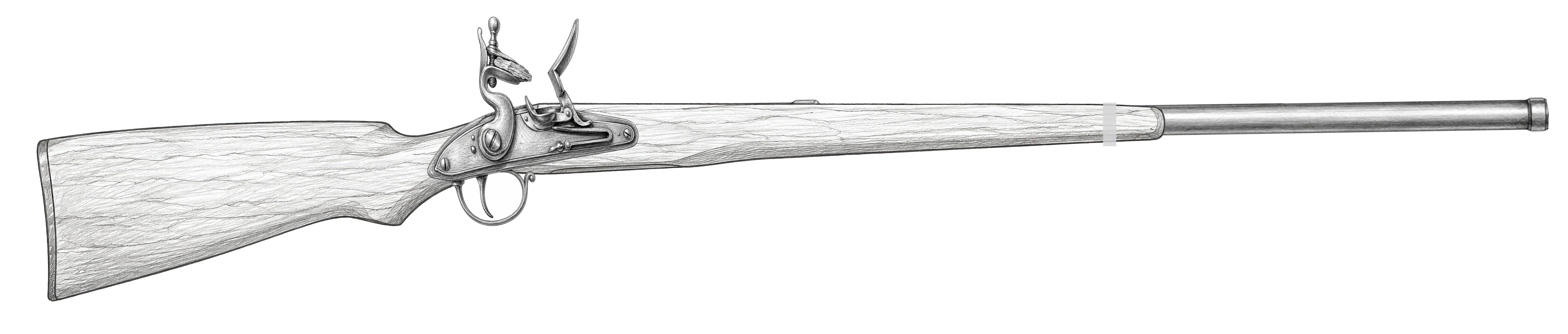
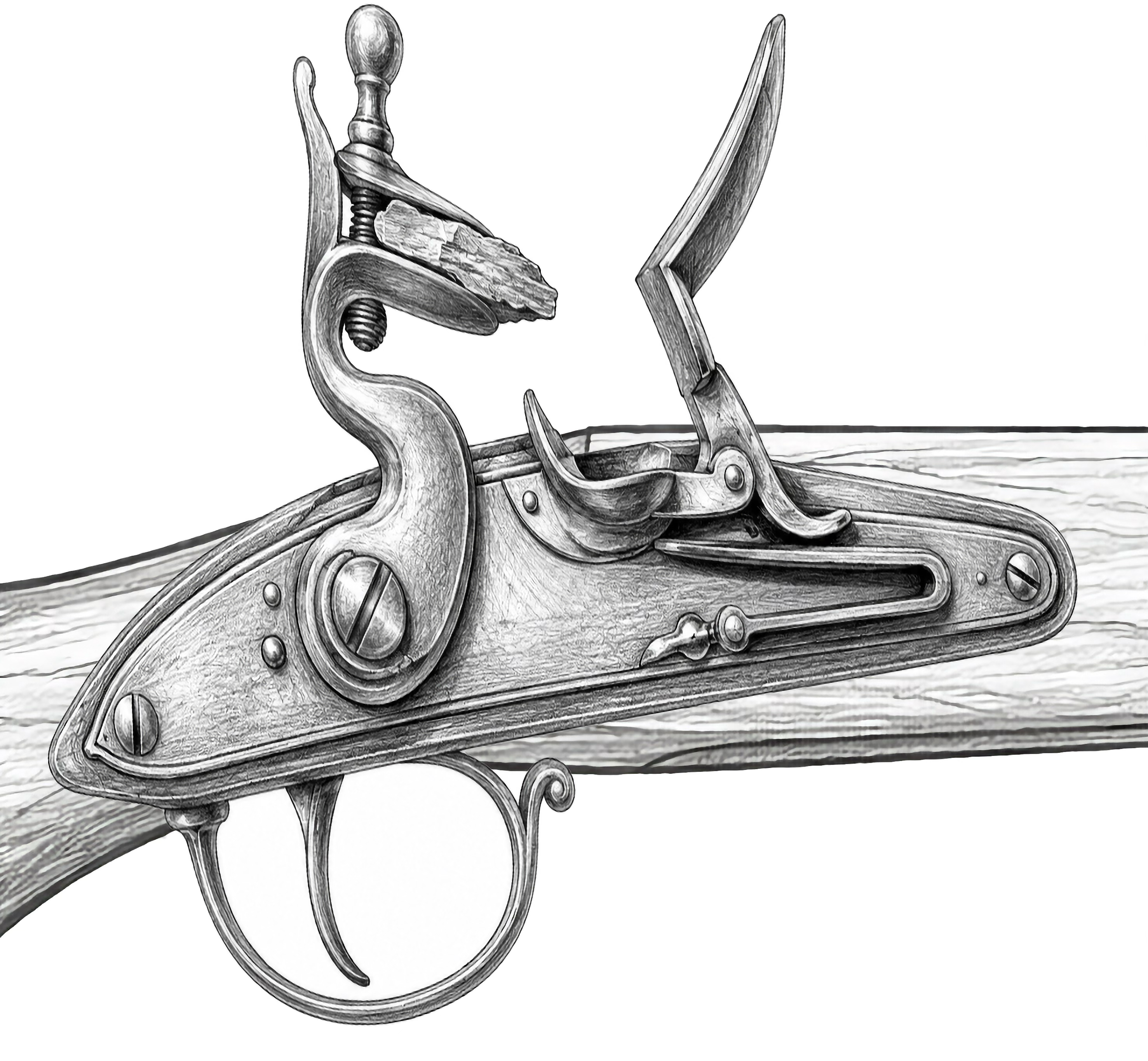
The Spark Lock is an 18.5 mm rifled muzzle-loader built around black powder, lead, flint, and a deliberately simple lock. It is among the least expensive rifles commonly available because its ammunition and ignition components can be supported by very small communities. Lead can be cast locally, powder can be made within a regional black-powder economy, and flints store well and travel easily. The weapon therefore trades speed of fire for exceptional independence from cartridge factories and precision disposable components.
The Spark Lock matters to Department 6 because technological simplicity can produce strategic endurance. A settlement with modest metalworking, woodworking, powder making, and lead casting can keep these rifles in service even when distant trade is interrupted. The rifled barrel gives the weapon greater deliberate accuracy than an ordinary smoothbore musket, while the muzzle-loading system places a practical limit on rate of fire. The enclosed lock and straightforward mechanism can be serviced by ordinary gunsmithing skills. Project personnel encountering Spark Locks in numbers should look beyond the apparent age of the design and assess powder production, lead supply, flint sources, gunsmith capacity, and the training of the people carrying them, because those factors determine how durable the local firearm system really is.
Source material: Gun Combat, GoKabi, Imperials Military, and Dwarrow. Illustrations on this page were extracted from the corresponding uploaded sourcebooks and renamed for web use.