

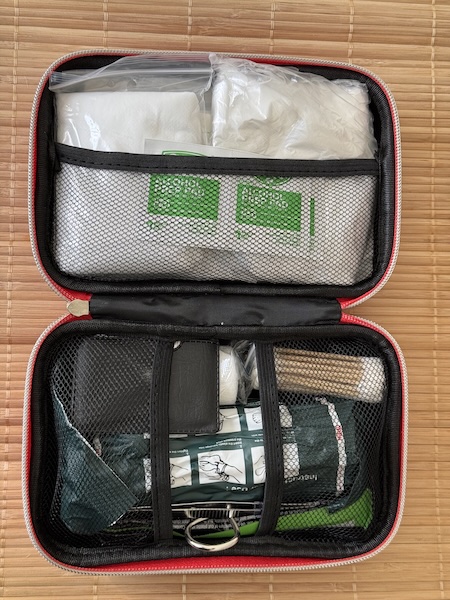
Every Troubleshooter carries a personal medical kit. It is one of the smallest standard issue items and one of the most frequently used. The kit is intended to address ordinary injuries and illnesses before they become larger operational problems and to provide the individual teammate with immediate treatment capability when the team medical bag is not yet available.
Department 3 treats the personal medical kit as a first-line health maintenance tool rather than as a substitute for trained medical personnel. The kit allows each teammate to manage blisters, minor wounds, headaches, gastrointestinal upset, allergic reactions, and other common conditions that can degrade performance if ignored.
The guiding principle is simple: small medical problems should be handled while they are still small.
Why Every Teammate Carries One
Minor injuries are common during field operations. Boots rub, clothing chafes, insects bite, tools slip, and unfamiliar food or water causes digestive disturbance. None of these conditions is dramatic. All of them can interfere with concentration, sleep, movement, and morale.
A blister treated early may prevent days of painful movement. A small cut cleaned promptly may avoid infection. A headache relieved before a long watch may preserve attention at a critical time. The personal medical kit gives each teammate the means to respond immediately instead of waiting until the condition worsens.
Typical Contents
Contents vary slightly by mission profile and individual needs, but most kits include:
- Adhesive bandages in several sizes
- Sterile gauze pads and rolled gauze
- Medical tape
- Antiseptic wipes
- Alcohol pads
- Antibiotic ointment
- Moleskin or blister dressings
- Elastic wrap
- Tweezers and small scissors
- Nitrile gloves
- Pain relievers and anti-inflammatory medication
- Antihistamines
- Anti-diarrheal medication
- Oral rehydration salts
- Water purification tablets
- A CPR barrier mask
- Personal prescription medications
Depending on assignment, additional items may include burn gel, insect repellent, sunscreen, eye wash, or specialized medications approved by medical staff.
Auto-Injectors
Many personal kits also include one or more of the standard Department 6 emergency auto-injectors developed under the X-1 Program. These may include Hemovitalizer, Analeptic, Polyvalent Detox, Immunoglobulin, and Ischemic Pressor.
These medicines are designed for emergency use by non-specialists and are selected for long shelf life and environmental stability. Their presence does not replace formal medical judgment, but they provide immediate options when minutes matter.
Organization and Packaging
The personal medical kit is packed in a compact zippered case with internal mesh pockets and elastic retainers. This arrangement allows rapid visual inspection and keeps items in fixed positions. A teammate should be able to locate gloves, dressings, and medicines under poor light and with limited dexterity.
Transparent or labeled packaging reduces uncertainty. Items are grouped by function so that wound care supplies, medications, and emergency items can be accessed without emptying the entire kit.
Health Maintenance in the Field
The most important use of the personal medical kit is routine health maintenance. Troubleshooters are expected to monitor their own feet, skin, hydration, and general condition. Early treatment preserves mobility and reduces the burden on the medical teammate.
This expectation is cultural as well as practical. Department 6 teams are small. A person who ignores preventable problems shifts avoidable work to others and increases the risk that a minor issue will become a medical emergency.
Support to Other Teammates
Although the kit is issued individually, it is not intended solely for personal use. Teammates routinely use their kits to assist one another. A team with six personal kits has a substantial reserve of dressings, medications, and small tools even before the larger team medical bag is opened.
This distributed approach increases resilience. If one kit is lost or inaccessible, other teammates retain overlapping capability.
Relation to the Team Medical Kit
The personal kit handles common and immediate needs. The team medical kit contains more extensive supplies, diagnostic equipment, and advanced treatment materials. The two systems are designed to complement one another.
A teammate should treat what can be treated immediately and seek assistance when the condition exceeds personal capability. The personal kit is therefore both a medical tool and an early warning mechanism. Using it often leads to the recognition that further care is required.
Inspection and Restocking
Personal medical kits are inspected regularly. Expired medications are replaced, used items replenished, and damaged packaging discarded. Prescription medicines are reviewed before deployment to ensure adequate supply for the planned mission duration.
Teammates are encouraged to customize their kits within approved limits. Individuals with allergies, chronic conditions, or known vulnerabilities may carry additional supplies tailored to their needs.
Psychological Reassurance
The presence of a well-organized medical kit provides reassurance beyond its physical contents. A teammate who knows that immediate treatment is available is more likely to act calmly and report problems promptly.
Confidence in small capabilities often prevents larger anxiety. This is one reason Department 3 places considerable emphasis on organization, familiarity, and routine use.
Logistical Judgment
The personal medical kit occupies little space, weighs very little, and requires modest maintenance. In return, it preserves comfort, mobility, and operational effectiveness. It reduces avoidable injuries, supplements team medical resources, and gives every Troubleshooter an immediate means of caring for themselves and others.
The kit represents a broader Project principle: small, well-chosen tools applied early prevent larger and more costly problems later.