
The Dustin-Rhodes luxury goods line began as an internal reward system. The idea was simple enough: Troubleshooters who completed difficult assignments deserved something better than an entry in a personnel file. A bottle, a box, a tin, or a fitted chest could be handed across a table, shared with a team, packed into a personal locker, or saved for the end of a long rotation. It was a tangible mark of service in an organization where public recognition is usually impossible.
Department 3 soon learned that these same goods had mission value. Premium coffee, tea, cigars, chocolate, spices, honey, bourbon, and writing supplies are small enough to pack, durable enough to store, recognizable enough to impress, and valuable enough to trade. They occupy an unusual place in Project logistics. They are comforts, gifts, barter goods, morale items, diplomatic instruments, and, on occasion, emergency currency.
This article explains why luxury goods appear in serious load plans. They are not decorative cargo. They are tools for dealing with human beings, and human beings are almost always the most complicated part of a mission.
The Original Purpose
The first purpose of the luxury line was internal. Project Negentropy asks more of its people than most corporate departments ever ask. Teammates enter cylinders, lose ordinary continuity with the world, emerge into uncertain conditions, and may spend long periods away from family, country, language, and familiar law. Security requirements limit ordinary honors. Many operations cannot be discussed outside the team that performed them.
A reward item answers that problem in a direct way. It does not require a public ceremony. It does not require publication. It does not reveal the mission. It tells the teammate that someone noticed. A case of reserve coffee, a cigar box, or a bottle of Smoky Barrel Bourbon becomes a private recognition of effort and survival.
These items also create occasions. A team can open a tin of coffee after its first stable camp is established. A bottle can be saved until a missing teammate is recovered. Tea can be served after a successful negotiation. Chocolate can be divided during a long watch or after a medical emergency. The value lies partly in the product and partly in the moment created by sharing it.
Why Department 3 Treats Them as Supplies
Logistics is the management of limited capacity. Every article loaded into a cylinder occupies space that could hold food, medicine, batteries, tools, or documents. Luxury goods therefore require justification. They earn their place because they solve problems that ordinary technical equipment cannot solve.
A radio can transmit. A medical kit can treat. A pipe car can move. None of them can automatically persuade a mayor, calm a frightened family, compensate a farmer, honor a village elder, or create a respectful opening with a merchant whose help is needed. Luxury goods perform that work when used with judgment.
The best examples share several qualities:
- They are compact relative to value.
- They survive storage and rough transport.
- They can be inspected without special tools.
- They are divisible or presentable as complete units.
- They are understandable across cultures.
- They retain value when local currency is weak or unfamiliar.
- They can be used by the team if no outside exchange occurs.
That last point is important. A crate of machine parts may be valuable only to someone who needs that exact part. A case of coffee is useful to the team, attractive to many outsiders, and easy to divide into smaller gifts. A good mission supply should have more than one path to usefulness.
Morale as a Practical Requirement
Morale is not a decorative concern. A hungry, exhausted, frightened, or isolated team makes worse decisions. It overlooks maintenance, delays medical reporting, takes unnecessary risks, and argues over small matters because larger pressures have gone unaddressed. Small comforts do not remove those pressures, but they give personnel a controlled way to mark endurance and recover a sense of ordinary life.
Coffee at first light, tea before a planning session, chocolate after a difficult extraction, or a shared cigar outside the operations tent may seem minor on a manifest. In practice, these moments help teams regulate themselves. They establish pause points. They remind personnel that survival is not only the avoidance of death, but the preservation of habits worth carrying forward.
This is why Department 3 distinguishes luxury goods from indulgence. Indulgence consumes resources without improving the mission. Appropriate luxury use strengthens the team, supports diplomacy, or purchases cooperation. The difference is judgment.
Diplomatic Gifts
Gift-giving is one of the oldest forms of political communication. It can express respect, recognize rank, open a negotiation, mark a treaty, apologize for inconvenience, or acknowledge the authority of a host. In many communities, arriving empty-handed is not neutral. It can be read as ignorance or contempt.
Dustin-Rhodes goods are useful in this role because they are intentionally packaged for presentation. The label, seal, box, tin, or chest communicates order and care before the item is used. A fitted tea chest says something different from loose tea in a bag. A sealed bourbon case says something different from an unmarked bottle. Presentation reduces doubt about quality and makes the act of giving more formal.
Team leaders should match the gift to the recipient. Tea may be suitable where hospitality and conversation are important. Coffee is often effective with workers, guards, merchants, and officials who keep long hours. Chocolate divides easily and can be given to families, medical staff, or exhausted labor crews. Spices are most useful where cooking, hospitality, and status foods matter. A fine writing kit can be more appropriate than food or drink when dealing with clerks, judges, scholars, schoolmasters, or treaty partners.
Alcohol and tobacco require care. Bourbon may be welcome in some settings and unacceptable in others. Cigars may open a conversation with one official and offend another. These products should never be used by habit. The teammate presenting the gift must understand the recipient, the setting, and the likely meaning of the object.
Barter and Emergency Currency
Luxury goods also function as concentrated stores of negotiable value. This matters when a team cannot rely on normal money. Local currency may be unavailable, distrusted, inflated, politically marked, or useless outside a narrow district. Precious metals may attract attention. Technical goods may reveal too much about the team. Food and medicine may be too important to trade except in crisis.
A premium consumable occupies a useful middle ground. It is valuable without exposing the team's critical equipment. It can be traded in whole cases or broken into smaller units. It can compensate a driver, secure lodging, obtain work space, reward a guide, or encourage a reluctant official to spend time on the team's problem.
Teams have used luxury goods to obtain:
- temporary storage space;
- cartage and local transport;
- shop access and machine time;
- labor for unloading, digging, and construction;
- introductions to officials or merchants;
- safe rooms for meetings;
- fresh food and animal feed;
- local maps, records, and route information;
- discreet repair work;
- cooperation from guards, ferrymen, drivers, or clerks.
None of these exchanges should be treated as bribery by default. Many are ordinary compensation in a local economy. The distinction lies in purpose and context. Paying a craftsman with coffee because the team lacks acceptable currency is trade. Giving bourbon to an official to make him ignore a dangerous violation is a different matter and may compromise the mission.
Specific Goods and Their Uses
The standard luxury list exists because different goods solve different social and logistical problems. No single item is universal.
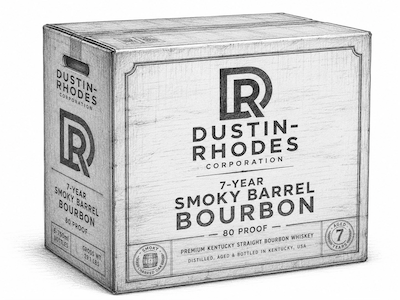
The 7-Year Smoky Barrel Bourbon is a formal gift, a morale item, and a high-value trade good. It is best used where alcohol is socially acceptable and where the recipient understands the value of a sealed, aged spirit. It is less suitable for casual barter because breaking a case reduces presentation value and because alcohol may create discipline problems if distributed carelessly.
Connecticut Wrapper Brazilian Leaf Cigars are compact prestige items. They are useful with merchants, officers, judges, and others for whom smoking tobacco is a recognized mark of leisure or status. They should be protected from heat and moisture and issued in a way that preserves their presentation.
Reserve Coffee is one of the most flexible luxury supplies. It supports team morale, can be shared in camp, and is valuable in trade. Coffee also creates working time. A pot served during a night repair, a medical intake, or an early planning conference can change the pace of cooperation.
Dark Chocolate Rations are divisible, portable, and widely appreciated. They are useful as gifts to workers, children, medical staff, and exhausted teammates. Because they are easy to divide, they can be used in small exchanges without committing an entire case.
Estate Honey functions as food, medicine-adjacent comfort, and a respected gift in many settings. It stores well and can be used in cooking, tea service, and morale support. Its mass and packaging require attention because jars are more vulnerable to breakage than tins or dry goods.
The Imperial Tea Selection is one of the safest diplomatic products when the team must show respect without introducing alcohol or tobacco. Tea can support formal hospitality, quiet negotiations, and shared conversation. The chest itself contributes to presentation.
The Traveler's Spice Chest is a high-value cultural tool. Spices are small, desirable, and closely tied to hospitality, medicine, cooking, religious observance, and status. They are especially useful when building relationships with households, cooks, merchants, physicians, and local elites.
The Fine Writing Kit is valuable where written agreements, certificates, letters, school records, court filings, religious documents, or official correspondence matter. It is also one of the few luxury goods that may assist administration directly.
Packaging as Part of the Supply
The packaging is not incidental. Dustin-Rhodes luxury products are packed for storage, shipment, and presentation. Tins resist moisture and can be reused. Hardwood chests protect fragile contents and signal value. Waxed liners, cork, molded separators, sealed canisters, and transit covers all reduce the risk that a valuable item becomes useless before it reaches the person for whom it was packed.
Good packaging also simplifies field accounting. A sealed case can be inventoried quickly. A broken case can be inspected and divided. Reusable containers become storage for documents, small tools, seeds, medical items, or samples after the original contents are gone. Department 3 likes supplies that leave something useful behind.
Teammates should preserve presentation packaging whenever possible. A tin of coffee handed across a counter is useful. A clean, unopened, well-labeled tin of coffee is more useful. A fitted chest presented with care carries more weight than the same contents wrapped in field cloth.
Risks and Misuse
Luxury goods can create problems when handled poorly. Alcohol can worsen disorder. Tobacco may offend. Gifts can be misread as bribes. Visible wealth can attract theft. Unequal distribution inside a team can create resentment. A careless teammate can spend diplomatic stock on personal comfort and leave the team without useful gifts when they are needed.
These risks are managed through control. Team leaders should decide which goods are personal morale stores, which are team morale stores, and which are mission stores. Mission stores should be logged like cash, ammunition, or medical supplies. A bottle given away for a reason should be recorded. A case opened for team use should be recorded. Informal use is acceptable only when the team has agreed that the item is no longer reserved for mission purposes.
Teammates should also avoid using luxury goods to dominate or humiliate local partners. A gift is most effective when it respects the recipient. It is least effective when it displays superiority. The purpose is to create a workable relationship, not to remind people that the Project has access to goods they cannot obtain.
Selection for Mission Profiles
A team should not carry every luxury item on every mission. The selection should reflect the likely social environment, transport limits, climate, and duration.
Urban recovery missions often benefit from coffee, writing kits, and small divisible goods because the team may need clerks, drivers, machine shops, and office access. Rural missions may benefit from spices, tea, honey, and chocolate because households and local leaders often control the flow of information and labor. Diplomatic missions may justify a bourbon case, cigar boxes, tea chests, and writing kits. Medical missions may benefit from chocolate, honey, tea, and coffee because these can support both staff morale and patient families.
Climate matters. Chocolate suffers in heat. Cigars require humidity control. Glass jars must be protected against vibration. Tea, coffee, spices, and writing kits usually tolerate transport more easily when their seals remain intact. A manifest should note not only value, but vulnerability.
Using Goods Without Creating Dependency
Luxury goods are best used to open doors and mark respect. They should not become the foundation of a relationship that cannot be sustained. A village that cooperates only because it expects a steady stream of premium goods may become resentful when the stock runs out. A local official who receives gifts too frequently may begin to treat them as tribute.
The better approach is to use gifts early and carefully, then move toward ordinary exchange: paid work, shared repairs, training, medical support, agricultural improvement, or mutual defense arrangements. Luxury items can begin a conversation. They should not replace the actual work of building trust.
Relation to the Credit System
Luxury goods are easy to underestimate because they look optional. They are also easy to overpack because they are pleasant. The credit system exists to force this decision into the open. A case of bourbon, a spice chest, or a coffee case competes with batteries, medical stores, ammunition, seed, and tools. The question is not whether the item is nice to have. The question is what work it is expected to perform.
A restrained luxury allocation can be excellent planning. A large one without a social mission is usually waste. Veteran teams tend to carry fewer items with clearer purposes. Newer teams often carry what they imagine will be enjoyable and later discover that enjoyment is not the same as mission utility.
Field Accounting and Custody
Department 3 recommends that mission luxury goods be assigned to a specific custodian. This may be the team lead, logistics teammate, quartermaster, or another person designated during preparation. The custodian is not the owner. The custodian maintains the count, protects the packaging, records issue, and reminds the team when a proposed use draws down mission reserves.
Opened goods should be repacked promptly. Partial tins, opened cases, and broken chests become difficult to present and easier to steal. A good custodian keeps unopened units for diplomacy and uses damaged or partial units for internal morale or low-level barter.
Practical Guidance
The following rules are useful in most field conditions:
- Do not offer alcohol until local custom is understood.
- Keep at least one sealed presentation item in reserve.
- Use divisible goods for ordinary barter.
- Use intact cases and chests for formal meetings.
- Record all mission use.
- Protect packaging as carefully as contents.
- Do not trade medical supplies when luxury goods will solve the problem.
- Do not use luxury goods to conceal unsafe or unethical agreements.
- Match the item to the person, not to the team's preference.
- Remember that a gift creates a relationship.
Logistical Judgment
Luxury goods are one of the few supply categories that can improve internal morale, create diplomatic openings, support barter, and preserve corporate identity at the same time. That combination makes them worth serious consideration. It also makes them easy to misuse.
The best teams treat them with the same discipline they apply to batteries, ammunition, and medical supplies. They know what is packed, why it is packed, who controls it, and what problem it is expected to solve. They understand that a tin of coffee, a spice chest, or a sealed bourbon case may at the right moment accomplish what a weapon, radio, or technical device cannot.
We carry these goods because Project Negentropy operates among people. Tools repair machines. Medicine treats bodies. Power runs equipment. Luxury goods, used properly, help build the human arrangements that allow all the other work to continue.