
Project Uniforms
Project Negentropy does not issue a dress uniform to make Troubleshooters look like soldiers. The clothing system exists to keep a teammate identifiable, protected from ordinary field wear, and able to work for long periods without demanding specialized laundry, tailoring, or replacement facilities. The standard appearance is intentionally plain: drab green work clothing with modest Project identification, worn with sturdy black boots and altered by the individual only as climate, assignment, and practical experience require.
This distinction is important when a team enters an unfamiliar community. Project clothing is organized enough to show that the wearers belong together, yet it avoids the deliberately martial appearance of helmets, standardized military headgear, parade trim, or rigid grooming rules. Teammates can meet farmers, mechanics, merchants, local officials, patients, witnesses, or frightened civilians dressed as a working party rather than an occupying force, while still recognizing one another immediately in a crowded road, ruin, camp, or emergency site.
The Working Uniform
The basic uniform descends from drab green ripstop cotton fatigue clothing adopted by Dustin-Rhodes Security in 1955 and later retained for Project service. The fabric is tightly woven to resist the spread of tears when it catches on machinery, brush, concrete, vehicle interiors, or damaged structures. Project garments are double-stitched with heavy thread, use flat internal seams to reduce chafing, and receive flame-retardant treatment so the fabric will not melt against the skin when exposed to heat. Cotton also remains comparatively easy to patch, sew, wash, and maintain in places where a teammate may have tools and thread but no access to a modern clothing supply chain.
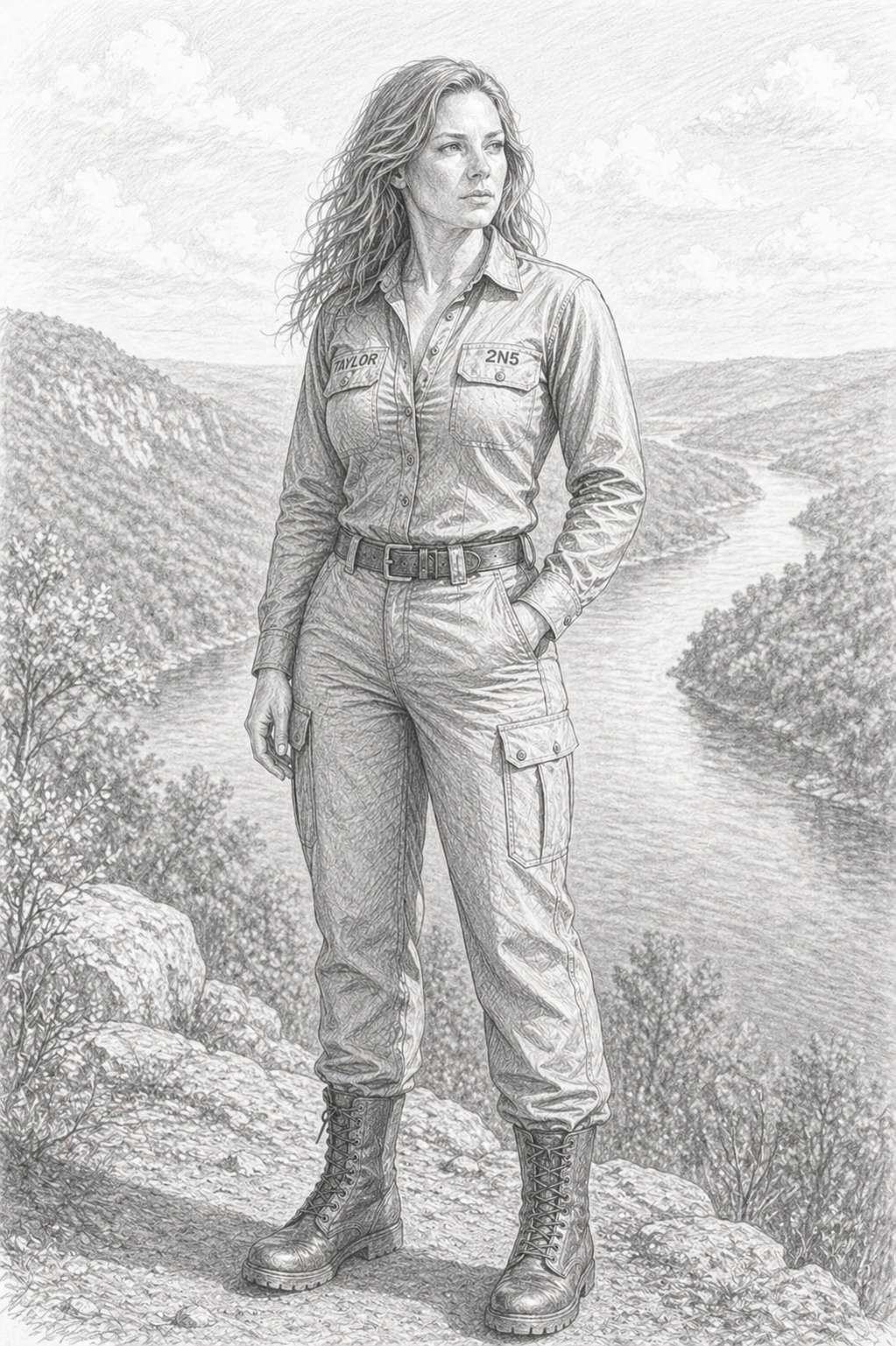
The working shirt is long-sleeved, collared, and buttoned at the front, with two chest pockets for small items that need to remain immediately accessible. The shirt can be worn with the sleeves down for brush, insects, sun, or cooler weather and adjusted as work requires. There is no issued ceremonial trim, shoulder decoration, or branch-colored dress system. A uniform can acquire repairs, local modifications, or mission-specific insignia during service without changing its basic purpose as durable clothing intended to be worked in.
Trousers and Boots
The fatigue trousers are loose enough for climbing, kneeling, crawling, riding in vehicles, and long periods of walking. Front and rear pockets handle ordinary personal items, while large flap-secured cargo pockets on the outer thighs carry notebooks, gloves, batteries, medical items, tools, magazines, ration components, and the other small objects that would otherwise migrate into a pack and become difficult to reach. Reinforced belt loops accept the Project equipment belt, and the trouser legs can be bloused into the boots or left loose according to climate and assignment.
The black field boots resemble military combat boots at first glance, but their origin is commercial rather than ceremonial. They are aggressive-tread hiking and work boots selected for prolonged wear, with heavy laces and reinforced soles and toes suited to rough ground, workshops, rubble, ladders, and vehicle work. Their appearance contributes to the common Project silhouette, while the selection principle remains the same as the rest of the uniform: a boot is issued because it protects the foot and survives work, not because a regulation requires a particular parade shape.
Identification Without Parade Dress
Project identification is kept on the working garment rather than reserved for formal occasions. The fatigue shirt carries embroidered markings on the pocket flaps, normally the teammate's surname on one side and team identification on the other. These markings allow personnel to identify one another quickly and make it clear to outsiders that the wearers belong to an organized group, but they stop short of turning the shirt into a display of rank, branch, or ceremonial distinction.
Project personnel are not issued a standard military hat, and haircuts are not standardized. Many teammates wear a preferred cap, brimmed hat, cold-weather hat, or locally acquired head covering as conditions require. This flexibility is deliberate because headgear is strongly affected by weather, local custom, personal comfort, and the need to appear approachable, while a prescribed haircut or uniform cap would add little to mission capability and would push the Project's appearance farther toward a conventional military organization.
Four Working Sets
Each Troubleshooter receives four complete working uniforms at assignment. The quantity is practical rather than generous: one set can be worn while another is being washed, a third can remain clean or ready for immediate change, and a fourth can stay packed as reserve clothing or replacement after contamination or damage. This becomes increasingly important when a mission operates beyond normal laundry facilities, because the ability to change into dry clothing is a health and maintenance issue rather than a question of appearance.
Uniforms are expected to age in service. Small tears are patched, buttons replaced, seams repaired, and worn garments kept in use while they remain protective and serviceable. Department 3 gains little by shipping an otherwise useful shirt back through the system merely because it looks used, and an experienced teammate often values a familiar garment that has already been altered around belts, packs, tools, and ordinary movement.
Underclothing and Camp Wear
The Project underclothing system is loose, lightweight, and intended to serve several jobs at once. It functions beneath the working uniform, but the shirt and drawstring trousers can also be worn as sleep clothing or informal camp clothing when the outer uniform is drying, being repaired, or simply unnecessary. Teams commonly call the loose combination the “harem suit,” a name that has survived because the garments look much less formal than ordinary work clothing and are exceptionally comfortable after a long day in boots and field gear.
The design favors breathability, repeated hand washing, rapid drying, and freedom of movement. Additional long underwear can be issued for cold operations and layered beneath the same standard working clothing rather than requiring a separate winter uniform. The result is a clothing system that changes by layers: a teammate does not stop wearing the Project uniform when the weather changes, but adds or removes insulating and protective garments around the same basic working clothes.
The Field Jacket
The field jacket is the ordinary outer layer when the fatigue shirt is insufficient. It uses the same general drab green ripstop material as the working uniform, with a below-the-hip cut, front zipper and storm flap, adjustable cuffs, reinforced elbows, and a waist drawcord that can be tightened against wind or loosened during hard movement. Four large exterior pockets and an internal document pocket allow the jacket to carry gloves, maps, notebooks, batteries, medical supplies, ammunition, and tools without forcing the wearer to remove a pack whenever something small is needed.
One field jacket is part of the normal individual issue. Like the fatigue clothing, it is expected to accumulate repairs and personal history. Jackets often remain in service after their original finish has worn because a garment that fits correctly under a pack, works with a teammate's belt arrangement, and has already been repaired at known weak points may be more useful than a perfectly new replacement.
The Winter Parka
The winter parka is added when sustained freezing temperatures, high winds, snow, sleet, or mountain conditions exceed what the ordinary field jacket can handle. Its drab green ripstop shell is treated for improved water resistance and covers a quilted insulating liner, while the longer cut protects the hips during watches, vehicle travel, and kneeling in snow. A heavy zipper and storm flap close the front, and large cargo pockets preserve the Project habit of keeping small field essentials accessible without stripping off outer clothing.
The insulated hood can be removed and is large enough to fit over a bare head, cap, or locally acquired cold-weather headgear. A detachable fur ruff helps break the wind around the face, while inner storm cuffs and adjustable drawcords limit heat loss when a teammate is standing still. The parka is mission and climate equipment rather than part of every basic issue, which allows Department 3 to allocate the bulk of heavy cold-weather clothing to teams that will actually use it.
Protective Equipment Is Not the Uniform
Protective vests, mesh suits, armored suits, environment suits, weapons, load-bearing equipment, and mission-specific safety gear may all be worn with or over the working uniform, but they remain separate equipment. This keeps the base clothing useful when the protective layer is unnecessary and prevents every Project member from having to dress as if combat or contamination were the normal condition of human contact. A teammate can arrive at a workshop, clinic, farm, village meeting, school, or trade camp in recognizable Project clothing without presenting the full silhouette of a tactical deployment.
The same separation gives a team more options after emergence. Armor may be scarce, damaged, inappropriate for the climate, or politically provocative, while ordinary clothes still have to be worn every day. A durable uniform that can survive independently of specialized protective systems therefore gives the Project more operational life than clothing designed only as the underlayer of advanced equipment.
Why Standard Clothing Matters
A Project uniform occupies little cylinder space compared with a vehicle, radio system, medical case, or machine tool, but it solves several small problems every day. Teammates can identify one another, carry basic items in known places, wear the same belts and packs, exchange spare garments, patch clothing with common materials, and maintain a coherent appearance without spending mission resources on ceremonial dress. Standardization also allows Department 3 to stock a manageable range of sizes and replacement parts instead of preserving dozens of unrelated clothing systems.
Most important, the uniform supports the way Department 6 is expected to work. Troubleshooters are sent to enter communities, examine problems, repair systems, treat people, negotiate, investigate, travel, and sometimes fight, often during the same assignment. Their clothing therefore has to tolerate mud, sweat, grease, rain, dust, blood, camp smoke, vehicle interiors, ruined buildings, and repeated washing while remaining ordinary enough that a Project member can sit at someone else's table without looking dressed for a parade or an assault. The drab green working uniform succeeds because it is recognizable, repairable, and deliberately unremarkable.